


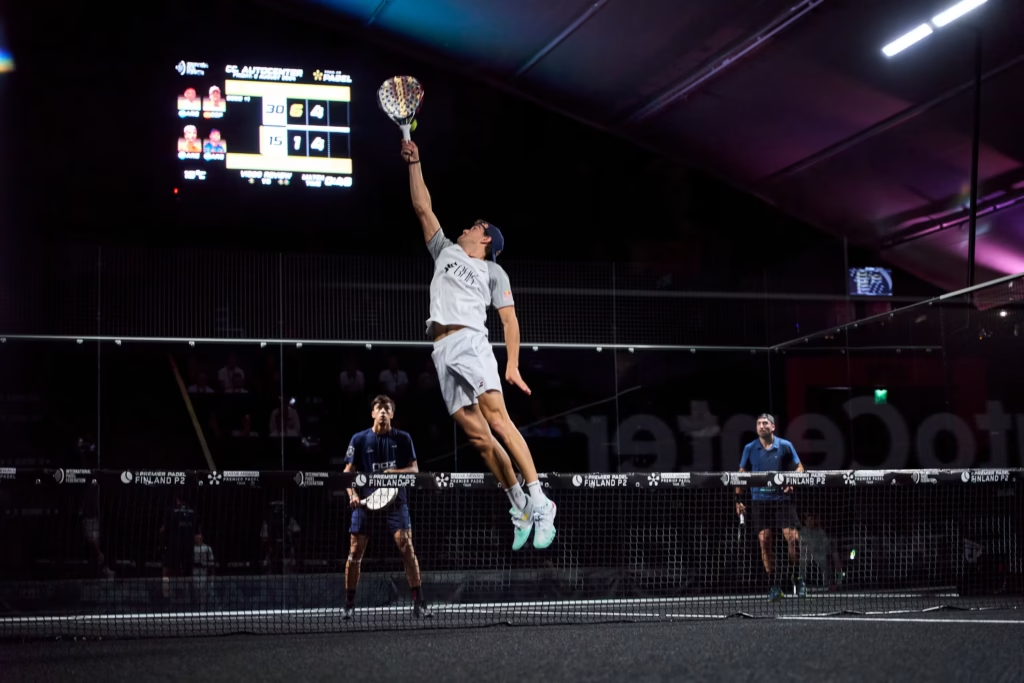
Control padel rackets by skill level help players choose equipment that matches their technique, experience, and match strategy—rather than relying on power alone. The right control-focused racket improves shot placement, reduces unforced errors, and boosts confidence at every stage, from learning basic rallies to executing tactical patterns under pressure.
Table Of Content
- Player Profiles That Match a Control-Focused Padel Racket
- Beginners who miss the sweet spot: when a larger control area matters
- Intermediate players building consistency: reducing unforced errors from the back of the court
- Defensive baseliners: deeper lobs and safer cross-court patterns
- Tactical builders: setting up the point before finishing at the net
- Comfort-first players: lowering vibration and managing arm sensitivity
- Control Padel Rackets Models 2025–2026
- FAQ: Control-Focused Padel Rackets
- 1. How do I know if a control-focused padel racket is right for me?
- 2. What is the best racket shape for beginners who struggle with accuracy?
- 3. Will a control racket limit my ability to finish points at the net?
- 4. What weight should I choose to avoid arm fatigue?
- 5. Can I use a control-focused racket as I progress from beginner to intermediate level?
- Control rackets prioritize placement and consistency over raw power, reducing unforced errors across all skill levels.
- Beginners benefit from round heads, soft/comfort EVA, and low-to-mid balance for forgiveness and easier handling.
- Intermediates and tactical players use firmer faces and medium EVA to refine precision while retaining maneuverability for net finishes.
In this guide, we break down control padel rackets by skill level, explaining which shapes, balances, materials, and weights work best for beginners, intermediate players, and advancing competitors. Whether you’re building consistency from the back of the court or refining touch and precision at the net, understanding how control rackets evolve with skill level will help you select a frame that supports smarter, more reliable padel performance.

Pick this category first if you win more rallies with depth, lobs, and low-error exchanges than with outright winners. The main advantage is predictable response: softer touch on volleys, cleaner blocks, and higher maneuverability in quick net exchanges–especially when defending against heavy bandejas and viboras. If your match plan is mostly defensive, a round or hybrid shape with medium/low balance helps you keep the face stable while absorbing pace.
Ideal profiles: baseline builders, counterpunchers, and net players who prioritize early preparation over late power swings. Look for a 2025–2026 model on Amazon with a round/hybrid head, a medium EVA (or “soft” EVA for comfort), and a textured surface for spin without sacrificing control. Target a weight range of 355–370 g if you want all-day handling; go lighter (350–360 g) if elbow/shoulder fatigue is a concern, and avoid head-heavy setups unless you already have strong technique.
For beginners: choose a forgiving round shape and a lower to medium balance to reduce mishits and keep swings compact. Models commonly available on Amazon in the 2025–2026 lineup that suit this approach include Adidas Metalbone CTRL 3.4, NOX ML10 Pro Cup 2025, and Bullpadel Vertex 04 Comfort–all known for stable touch and consistent exits that reward correct timing rather than brute force.
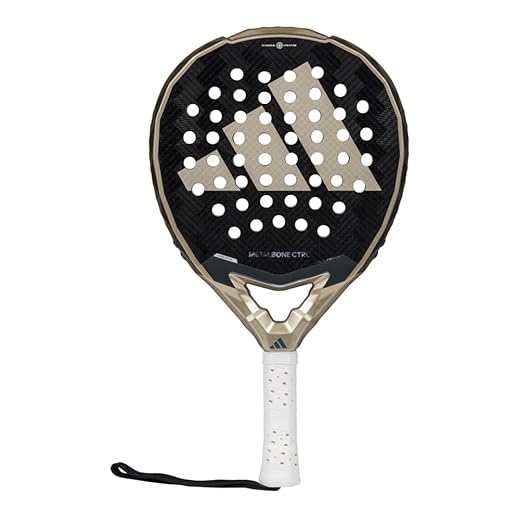
For intermediate competitors: move toward a firmer face or carbon mix if you already control trajectory and want sharper feedback on volleys and chiquitas. Good Amazon-ready options from recent releases include HEAD Speed Motion 2025 and Babolat Counter Veron 2026, which keep directional accuracy high while adding a bit more punch when finishing at the net–without drifting into overly head-heavy behavior.
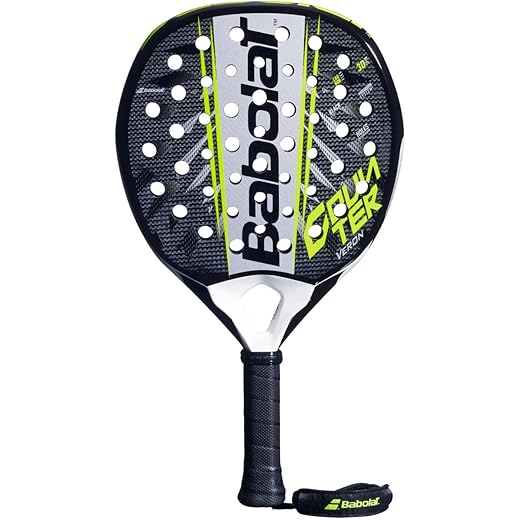
Babolat Counter Veron 2.6 Padel Racket (Black/Yellow)
Player Profiles That Match a Control-Focused Padel Racket
Choose a round-shape, low-to-mid balance frame (345–365 g, 38 mm) if your priority is reliable placement and fewer unforced errors from the back of the court. This type of setup boosts maneuverability in fast exchanges and helps you keep the ball deep with cleaner precision on lobs, blocks, and soft volleys.

Adidas Metalbone Padel Racket Paddle Series
Beginners building consistency: pick a softer EVA (often marketed as “soft” or “comfort”) and a larger sweet spot so your defensive returns stay stable even on off-center hits. Look for carbon/fiberglass blends instead of full hard carbon if you want easier depth without overswinging. Amazon 2025–2026 examples worth checking: HEAD Zephyr 2025 and Metalbone Team 3.3 (2025)–both are typically tuned for easy handling, solid control, and forgiving placement.

HEAD Graphene 360 Zephyr Padel/Pop Tennis Paddle Series (Zephyr,Pro, UL)
Defensive baseliners and counterpunchers: prioritize medium EVA plus a round head to absorb pace and redirect it with accuracy. A slightly higher balance can add depth on lobs, but keep it “mid” if you frequently defend the glass and need quick reactions. Amazon 2025–2026 options to compare: Nox ML10 Pro Cup (2025 edition) for stable touch and Bullpadel Vertex CTR (2025) for firmer response when you want sharper precision on blocks and chiquitas.

Padel Racket ML10 Pro Cup Coorp by Miguel Lamperti 2025 | High-Performance Pala Padel | Carbon Frame & Glass Silver Face | Enhanced Power & Control |...
Intermediate all-rounders refining tactics: go for a controlled feel with enough pop to finish points at the net without sacrificing placement. A 12K/3K carbon face with medium EVA often gives that blend: firm enough for crisp volleys, still predictable on slower defensive balls. Amazon 2025–2026 models often aligned with this profile: Babolat Counter Veron (2026) and Wilson Blade V3 (2025), commonly chosen for balance between maneuverability and directional control.

Wilson Blade Padel Rackets
Net-focused volleyers seeking clean touch: aim for a round or teardrop frame with low balance to speed up hand movement in rapid volleys and recoveries. This improves precision on angled placements and short blocks. If you play many quick exchanges, avoid overly head-heavy builds even if they add power–faster handling usually wins more points in tight rallies.
Beginners who miss the sweet spot: when a larger control area matters
Choose a round shape with a wide sweet spot and low-to-mid balance if you often hit slightly off-center–this immediately reduces vibration, keeps the ball in play, and improves placement on slower swings.
Look for these specs to make missed contacts less punishing: 360–370 g (lighter helps maneuverability), soft EVA core (adds dwell time for precision), and a round head with a generous hitting zone. A practical target is low balance for quick reactions in defensive situations at the back glass, plus a textured face only if it doesn’t feel “boardy” on touch shots.
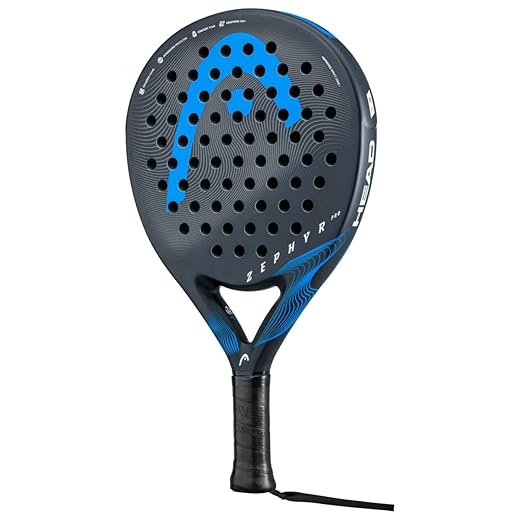
HEAD Graphene 360 Zephyr Padel/Pop Tennis Paddle Series (Zephyr,Pro, UL)
Good Amazon picks from 2025–2026 lines that match this brief: Bullpadel Flow Women 2026 (easy handling, friendly sweet spot), Nox X-One Evo 2026 (for consistent control and stable feel), and Head Zephyr Pro 2025 (very forgiving with high maneuverability). If you’re already edging into intermediate play, prioritize a slightly firmer core for cleaner precision on volleys without losing the bigger sweet zone.

BULLPADEL Padel Racket FLOW Women 2025 Alejandra Salazar | Diamond Shape Pala Padel | Fibrix Hybrid Fiber & MultiEva Core | FlowForce Heart & Rough 3D Grain...
Quick drill to confirm the match: play 10 minutes of defensive lobs and slow cross-court blocks–if your placement stays deep even on slightly late hits, the wider sweet spot and control-leaning setup are doing their job.
Intermediate players building consistency: reducing unforced errors from the back of the court
Pick a round shape with a low-to-mid balance (around 255–265 mm) and a medium EVA core: this combo boosts maneuverability on late contacts and keeps the face stable, so back-court mistakes drop fast. For an intermediate level, aim for 360–370 g and a matte 3K/12K carbon face for cleaner touch; overly head-heavy frames tend to punish rushed lobs and defensive blocks with extra errors.
To reduce unforced errors from the baseline, prioritize precision over raw speed: keep your swing compact and use a “90% pace” rule on rallies (hit with enough margin to clear the net by 40–60 cm). In defensive situations, set the contact point slightly in front of your lead hip and open the face 5–10° on low balls; this simple adjustment improves depth control and prevents floaty sitters. If you’re coming from beginners habits like over-arming, focus on using the shoulder turn first, then the forearm–your timing becomes repeatable, especially when returning fast glass rebounds.
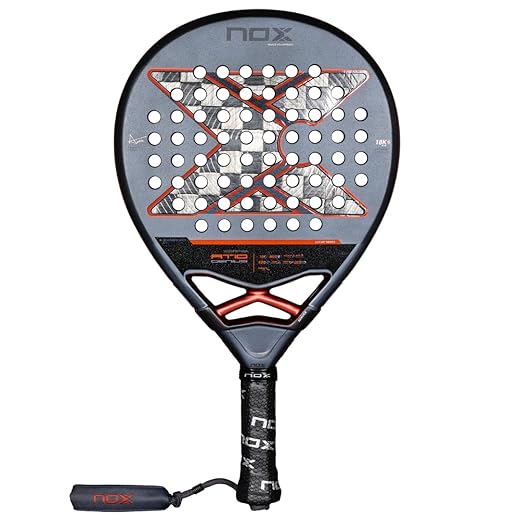
Padel Racket AT10 Genius 18K Alum by Agustin Tapia 2025 | Luxury Teardrop Pala Padel | Enhanced EOS Flap & NOX Custom Grip Technology Dual Texture Spin...
Good 2025–2026 Amazon options that suit this “back-court consistency” profile: Bullpadel Vertex 04 Comfort (2025) for forgiving response and stable blocks, Nox AT10 Genius 18K (2025) for clean output and high control on lobs, and Adidas Metalbone Carbon CTRL 3.4 (2025) if you want sharper placement without losing safety on resets. When comparing, choose the one that lets you hit 20 straight deep cross-courts without drifting long; that’s the practical test for consistency.

BULLPADEL Padel Racket Vertex 04 Comfort 2025 | Professional Diamond Shape Pala Padel | Curvaktiv & Air Power Technology | Fibrix Hybrid Fiber & MultiEva...
Defensive baseliners: deeper lobs and safer cross-court patterns
Pick a round shape with low-to-mid balance and a softer core if your game is defensive: it gives immediate control on deep lobs and reduces unforced errors on safer cross-court patterns. Aim for balance close to neutral (not head-heavy) to keep maneuverability high when you’re digging low balls near the glass and resetting the point with high, deep clearance.
For deeper lobs, prioritize precision and consistent placement over raw power: choose a surface that grips the ball (rough/3D texture) and a medium EVA that doesn’t “catapult” shots long. In practical terms, it helps you lift from a low contact point and land lobs within the last 1–2 meters of the court more often, forcing opponents away from the net and buying time to recover position.
Recommended 2025–2026 Amazon options for this style: adidas Metalbone CTRL 3.4 (2025) for stable response and reliable cross-court targeting, HEAD Gravity Motion (2025) when you want extra maneuverability in fast exchanges, and Nox ML10 Pro Cup (2025 edition) for forgiving touch on defensive blocks and controlled lobs. These choices suit an intermediate level aiming to win points through patience, depth, and repeatable patterns rather than risky winners.
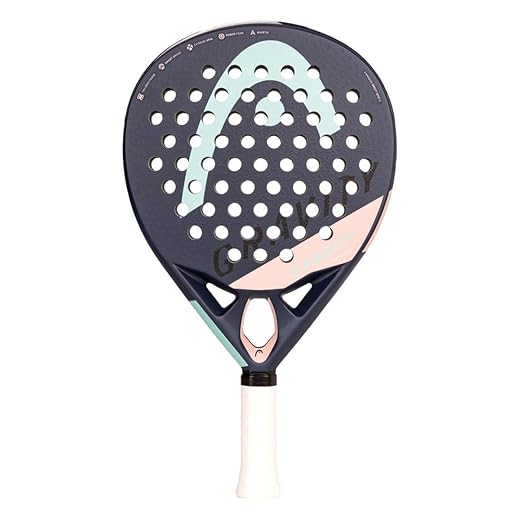
HEAD Gravity Padel Racket Paddle Series (Pro, Motion, Elite)
Two high-percentage patterns to train with a control-focused setup: (1) cross-court to the opponent’s backhand corner, then repeat until you get a short ball; keep the ball above net tape with safe margin and target a 1 m window from the side glass for clean placement. (2) when pinned, lob cross-court instead of down-the-line; the longer diagonal gives extra safety and helps maintain precision even under pressure.
Tactical builders: setting up the point before finishing at the net
Pick a round head shape with medium/low stiffness and a slightly head-light balance to win points in two steps: first with placement from the back, then with a clean finish at the net. This setup boosts precision on lobs, cross-court shots, and low volleys, and it stays reliable in defensive situations when you’re stretched wide.
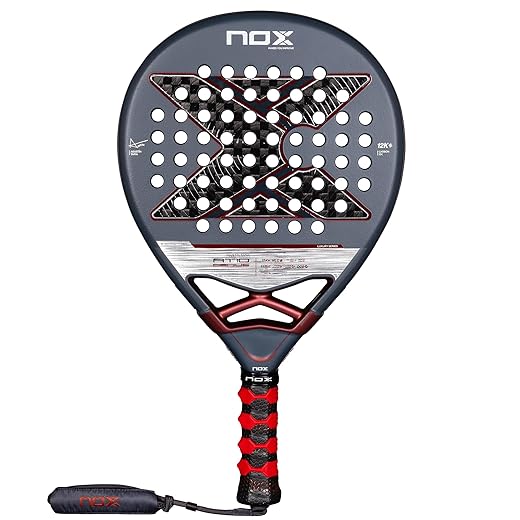
Padel Racket AT10 Genius 12K by Agustin Tapia 2025 | Luxury Series Teardrop Pala Padel | EOS Flap Aerodynamics & Custom Grip Technology | Carbon with MLD...
For 2025–2026 Amazon models that match this “build then finish” style, prioritize 365–375 g, rough face for spin, and a larger sweet spot. Good picks to search on Amazon:
- adidas Metalbone Carbon CTRL 3.4 (2025) – stable feel for deep placement, predictable response for net approaches.
- Bullpadel Vertex 04 Comfort (2025) – easier handling for quick transitions, strong defensive blocks and controlled volleys.
- NOX AT10 12K (2025) – consistent output for building rallies; dependable precision on lobs and bandejas.
- HEAD Speed Motion (2025) – fast through the air for reaction volleys; helps intermediate attackers move forward safely.
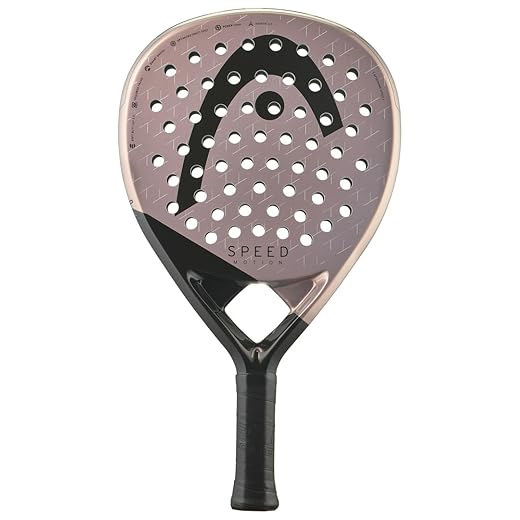
HEAD Speed Padel Racket Paddle Series (Pro, Pro X, Motion, Elite, ONE, ONE X, Team)
Point construction checklist (works especially well for beginners moving into intermediate competition):
- Start defensive, aim deep: hit 3–5 balls to the back glass with high margin; prioritize placement over speed.
- Change height before pace: one higher lob to push opponents back, then a lower ball to the feet to open space.
- Advance on the “safe ball”: move in after a deep ball that forces a rebound; keep compact swings for precision.
- Finish simple at the net: volley to the open corner or play a soft drop; don’t force winners if the angle isn’t there.
Buying specs for this tactical role:
- Shape: round for forgiveness and consistent touch.
- Core: medium EVA for predictable rebound and better control in resets.
- Surface: textured/rough for easier topspin and slice without overhitting.
- Balance: slightly head-light for quick net reactions and safer defensive blocks.
If your pattern is “build with accuracy, then close,” a forgiving round option with stable control keeps errors down while you step forward–and it makes the net finish feel automatic instead of rushed.
Comfort-first players: lowering vibration and managing arm sensitivity
Pick a round-shaped, medium-soft frame (EVA Soft/Comfort) with a slightly head-light balance to cut vibration and keep the swing easy on sensitive elbows and wrists. This setup improves maneuverability at the net and during quick blocks, while still giving enough pop for clean placement without forcing you to hit hard.
For beginners and intermediate hitters with arm discomfort, prioritize these specs: 360–370 g (unstrung equivalent listed by brand), low-to-medium density core, fiberglass faces or carbon with vibration-damping layers, and an anti-shock bumper/edge guard. A softer surface enlarges the sweet spot, helping precision on lobs and slow volleys, especially in defensive points where you absorb pace instead of generating it.
Amazon 2025–2026 options to shortlist (search these exact model names): Bullpadel Vertex 04 Comfort (2025) for a plusher feel with modern dampening tech, Adidas Metalbone Carbon CTRL 3.4 (2025) if you want adjustable features while keeping comfortable response, and Nox ML10 Bahia 12K (2025) when you want a forgiving hit and reliable placement under pressure. If your arm is very sensitive, favor the softer “Comfort/Soft” variants over harder Pro editions, even if you lose a bit of raw speed.
Quick setup tips that immediately reduce sting: add an overgrip (or two) to slightly shift balance toward the handle, keep grip size snug to avoid over-squeezing, and replace worn grips every 10–15 hours of play. If you’re mainly defensive, practice short compact swings and let the sweet spot do the work–this raises precision and keeps your joints calmer than late, full-power cuts.
Control Padel Rackets Models 2025–2026
| Model | Skill Level | Head Shape | Balance | Face / Materials | Best For |
|---|---|---|---|---|---|
| Adidas Metalbone CTRL 3.4 (2025) | Beginner → Intermediate | Round | Low–Mid | Carbon | Maximum control, stable blocks, deep placement |
| NOX ML10 Pro Cup (2025) | Beginner / Defensive | Round | Mid | Carbon | Forgiving touch, consistency, low-error play |
| Bullpadel Vertex 04 Comfort (2025) | Beginner / All-round | Round | Mid | Carbon + Comfort EVA | Comfort, vibration reduction, stable volleys |
| HEAD Zephyr (2025) | Beginner | Round | Low–Mid | Composite | Easy handling, large sweet spot |
| Metalbone Team 3.3 (2025) | Beginner | Round | Low–Mid | Composite | Forgiveness, compact swings |
| Bullpadel Flow Women (2025) | Beginner | Round | Low | Carbon | Lightweight control, maneuverability |
| Nox X-One Evo (2026) | Beginner | Round | Low–Mid | Carbon | Consistent exits, soft feel |
| HEAD Zephyr Pro (2025) | Beginner / Comfort | Round | Low–Mid | Composite / Carbon | Very forgiving, arm-friendly |
| HEAD Speed Motion (2025) | Intermediate | Teardrop / Hybrid | Mid | Carbon | Fast handling, clean net play |
| Babolat Counter Veron (2026) | Intermediate | Round / Hybrid | Mid | Carbon (12K/3K mix) | Control with added finishing power |
| Bullpadel Vertex CTR (2025) | Intermediate / Defensive | Round | Mid | Carbon | Precision on blocks and chiquitas |
| Wilson Blade V3 (2025) | Intermediate | Round / Hybrid | Mid | Carbon | Balanced control and maneuverability |
| NOX AT10 Genius 18K (2025) | Intermediate / Tactical | Round | Mid | 18K Carbon | Lobs, defensive resets, accuracy |
| HEAD Gravity Motion (2025) | Defensive / All-round | Round / Hybrid | Low–Mid | Carbon / Composite | Maneuverability, fast reactions |
FAQ: Control-Focused Padel Rackets
1. How do I know if a control-focused padel racket is right for me?
A control-focused racket is ideal if you win points through consistency rather than raw power. If your game relies on deep shots, lobs, safe cross-court rallies, and minimizing unforced errors—especially from the back of the court—this type of racket will suit you. Players who value placement, defense, and tactical construction over flat winners benefit the most from round or hybrid shapes with medium or soft EVA.
2. What is the best racket shape for beginners who struggle with accuracy?
For beginners, a round shape is the safest choice. It offers a larger sweet spot, better vibration absorption, and more predictable ball output on off-center hits. Combined with low to medium balance, it helps keep swings compact and controlled, reducing mishits and improving confidence during rallies.
3. Will a control racket limit my ability to finish points at the net?
No—if chosen correctly. Modern control rackets (especially 2025–2026 models) are designed to provide enough pop for volleys and overheads without becoming head-heavy. Many intermediate players successfully finish points at the net using control-oriented rackets thanks to better maneuverability, cleaner touch, and faster reaction time during quick exchanges.
4. What weight should I choose to avoid arm fatigue?
Most players are comfortable in the 355–370 g range. If you experience elbow or shoulder discomfort, aim for the lighter end (350–360 g) and choose a softer EVA core. Avoid head-heavy balance, as it increases strain during defensive blocks and late contacts. Adding overgrips can also fine-tune balance and reduce vibration.
5. Can I use a control-focused racket as I progress from beginner to intermediate level?
Yes. Control-focused rackets are often the best long-term option because they support technical development. As you improve, you can transition to slightly firmer faces (3K/12K carbon) or medium EVA cores while keeping the same round or hybrid shape. This allows you to gain sharper feedback and precision without sacrificing consistency.



No Comment! Be the first one.