


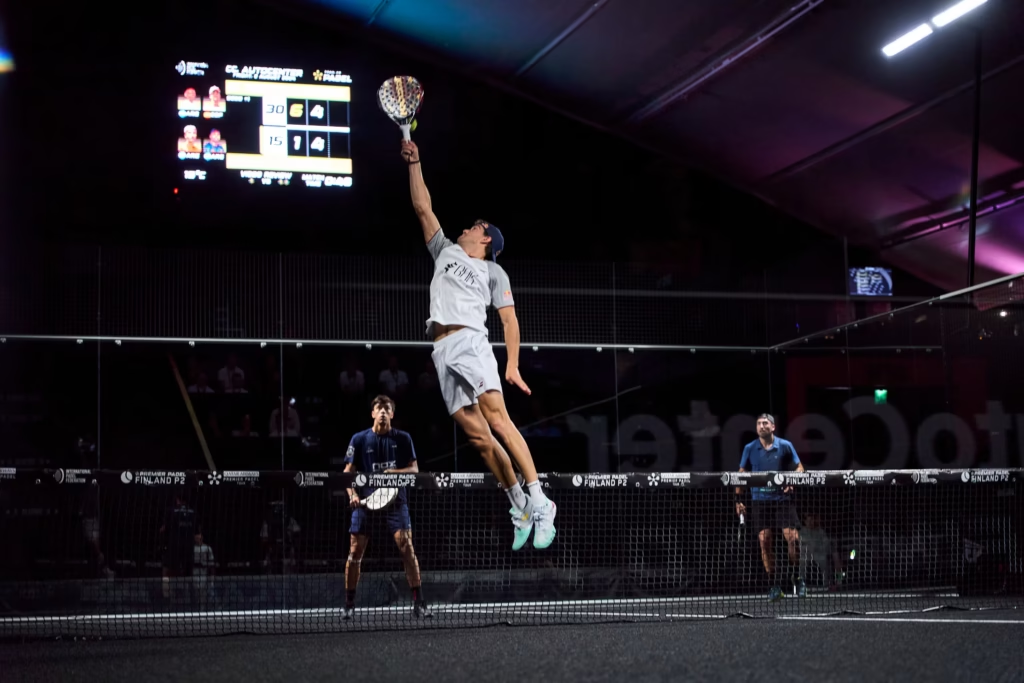
When choosing the perfect padel racket, understanding the impact of heavier padel rackets weight is essential for both beginners and seasoned players. A racket’s weight influences power, control, and overall comfort during play. While lighter options offer easier maneuverability and faster reactions, heavier padel rackets provide greater stability and more powerful shots, making them ideal for players looking to enhance their strength on the court. In this guide, we explore how heavier padel rackets weight affects your game, helping you make an informed choice that balances performance, endurance, and play style.
Table Of Content
- Power vs Weight in Padel: What Really Changes When You Go Heavier
- How racket mass affects ball speed through momentum and swing speed
- Why balance (head-heavy vs head-light) can add or remove “power” at the same weight
- Sweet spot size and off-center hits: what heavier frames do to stability
- Power on flat hits vs topspin/slice: which benefits more from extra grams
- How surface materials and core density can outweigh “grams on the label”
- Upsides of Heavier Padel Rackets: When More Weight Helps
- Questions and answers
- Will a heavier padel racket automatically give me more power on my shots?
- What are the main downsides of going heavier—control, arm pain, slower reactions?
- Is racket weight the same thing as balance? I see “head-heavy” and “handle-heavy” mentioned a lot.
- I’m a beginner/intermediate player—what weight range should I look at, and how do I choose without guessing?
- Can I “make” my racket heavier for more power (overgrips, protector tape, lead tape), and where should I add weight?
- Do heavier padel rackets really give more power, or is it just a “feel” thing?
- I’m getting elbow/shoulder fatigue with a heavier racket. Should I drop weight, or change balance instead?
- Increase weight gradually (5–15 g), testing swing speed and timing to avoid slower contact and reduced ball speed.
- Heavier rackets boost stability and off-center forgiveness, improving depth and consistency on flat drives and volleys.
- Balance matters as much as mass; head-heavy adds momentum but reduces maneuverability, head-light preserves quick reactions and control.

Recommendation: move up in weight only in 5–10 g steps, and stop the moment your average swing speed drops; for most intermediate players that means staying around 355–370 g, while advanced hitters who keep fast acceleration often benefit around 370–385 g. The extra mass increases ball speed mainly through higher momentum and inertia, but it stops helping when late contact appears.
For net exchanges and defensive resets, prioritize control and maneuverability: a quicker frame lets the face arrive on time, which effectively enlarges the usable sweetspot under pressure. If volleys feel sluggish or you’re consistently contacting behind the body, dropping 10–15 g typically restores timing faster than changing surface texture or core hardness.
For baseline drives and overheads, prioritize stability: added mass and a slightly head‑biased balance resist twisting on off‑center impacts, keeping the face angle steadier and reducing energy loss. As a practical filter, pick a 2025–2026 Amazon-available model in two close weight ranges, then select the one that holds line on hard returns without forcing a slower preparation–stable enough to block heavy shots, light enough to accelerate through the ball.
Power vs Weight in Padel: What Really Changes When You Go Heavier
If your main goal is a harder ball with fewer mishits, move up only 10–20 g at a time and keep balance close to your current setup (don’t jump from even to strongly head-heavy in one step). In real play, added weight changes output mostly through momentum: once the frame is moving, it resists slowing down on contact, so flat drives and viboras feel “denser.” For most intermediate players, the sweet zone is typically 360–375 g (without overgrip/guard), because it boosts punch while preserving enough maneuverability for fast exchanges at the net.
What actually changes in the stroke is the swing profile. A heavier setup usually lowers peak swing speed by 3–8% in quick reactions, but increases impact firmness if timing is good. The trade-off is simple: higher momentum rewards full, committed swings; rushed blocks tend to arrive late. If you often defend from the back glass and rely on compact motions, pick an extra +10 g and keep balance neutral; if your game is net-first with rapid hand exchanges, avoid big jumps in mass and prioritize maneuverability.

Wilson Bela V3 Padel Rackets - Grip Size 2-4 1/4"
Stability improves first; “extra pace” comes second. The biggest gain is torsion resistance on off-center hits, so the face twists less and directional control improves–especially on volleys and counter-bandejas. That also makes the effective sweetspot feel wider because the response stays consistent near the edges. If you’re missing the center a lot, increasing mass is often a better fix than chasing a different surface texture.
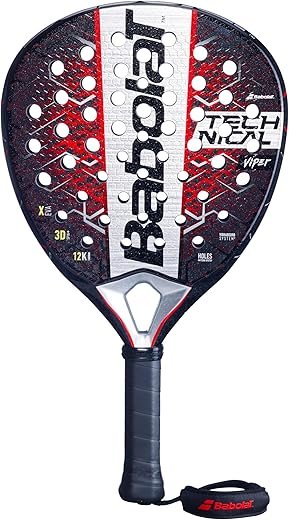
Babolat Technical Viper 2.5 Padel Racket
Use these practical checkpoints before switching: if your shoulder feels heavy after 60–90 minutes, drop 5–10 g; if your blocks wobble on hard incoming shots, add 5–15 g or move to a model with higher frame rigidity for better stability. Also watch head feel: a slightly higher balance can add depth from the baseline, but it can cut maneuverability at the net faster than total mass alone. As a rule, changing balance by even a few mm is often more noticeable than changing total weight by 5 g.
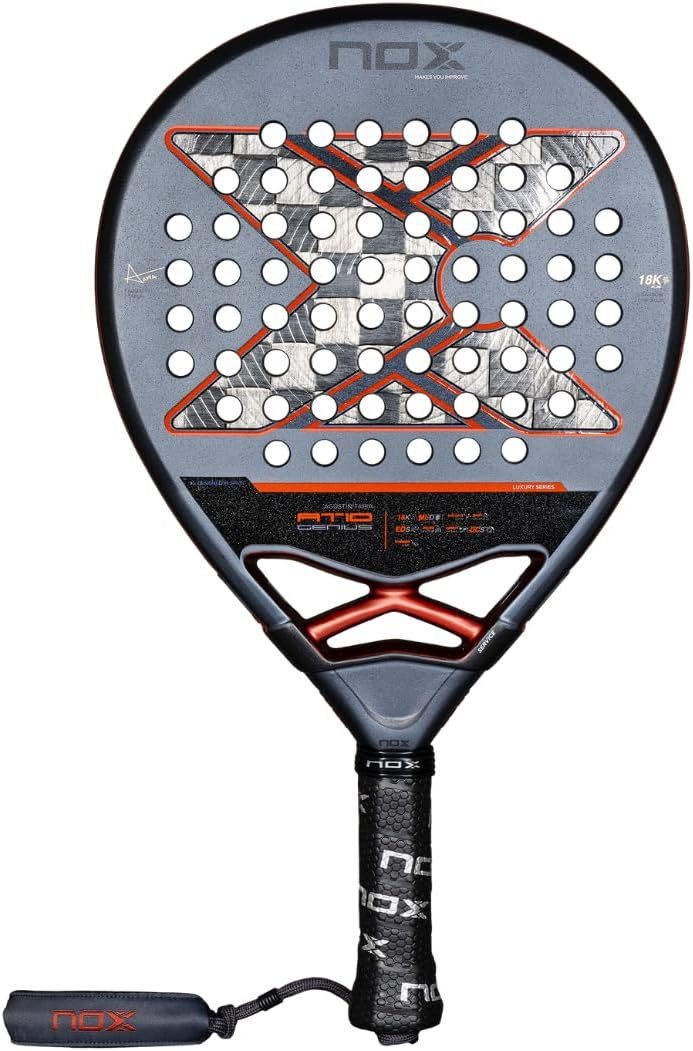
Padel Racket AT10 Genius 18K Alum by Agustin Tapia 2025 | Luxury Teardrop Pala Padel | Enhanced EOS Flap & NOX Custom Grip Technology Dual Texture Spin...
2025–2026 Amazon examples to benchmark (look for current-year listings): HEAD Speed Motion 2025 (quick handling, easier acceleration), NOX AT10 Genius 18K 2025 (solid control and stable response), Babolat Technical Viper 2025 (crisp impact, demands clean timing), Wilson Bela Pro V3 2025 (firm feel, strong stability). If you’re stepping up mass, choose a model known for a forgiving sweetspot rather than a very compact head shape.
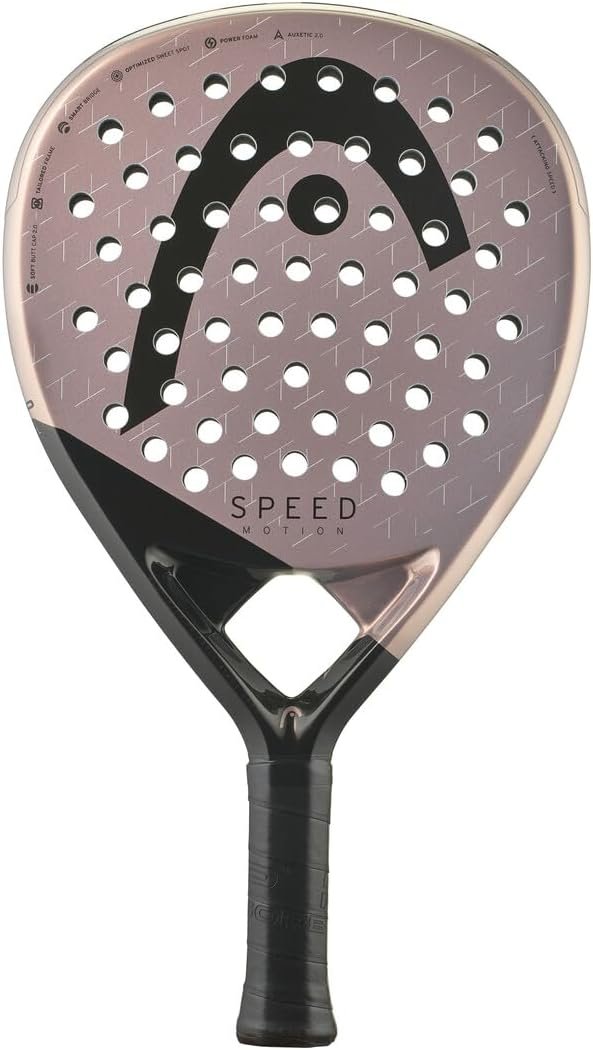
HEAD Speed Padel Racket Paddle Series (Pro, Pro X, Motion, Elite, ONE, ONE X, Team)
How racket mass affects ball speed through momentum and swing speed
For faster ball speed, target a frame mass around 360–375 g (unstrung equivalent in this sport category) with a neutral balance (≈265–270 mm): it usually keeps swing speed high while still adding enough inertia to push momentum through contact.
Ball speed comes from two competing factors: swing velocity and effective mass at impact. Momentum is roughly p = m × v. Adding weight increases momentum only if it doesn’t slow the swing too much. Many players lose 5–10% swing speed when moving up one step in mass; that can erase the gain from extra mass. A practical test: if timing drops and contact shifts off-center, ball speed often falls because the sweetspot isn’t being hit cleanly.
Balance matters as much as total mass because it changes rotational inertia. A head-biased setup boosts “plow-through” but typically reduces maneuverability on quick volleys and defensive blocks. For most intermediates, prioritize a balance that lets rapid acceleration happen: better control and consistent contact inside the sweetspot often adds real pace via cleaner energy transfer.
On off-center hits, higher stability helps preserve speed. More mass and higher twist resistance reduce face rotation, so the rebound angle is steadier and the ball leaves faster. If mishits are common, don’t chase extreme head mass; instead, pick a model with built-in torsional support (carbon layup, reinforced bridges) so stability rises without wrecking maneuverability.
- Need speed on full swings: keep weight moderate, balance near-neutral, and maximize swing acceleration.
- Need speed on blocks/volleys: prioritize stability (torsion control) so the face stays square and the sweetspot plays larger.
- If arm fatigue shows up: reduce rotational inertia (less head bias) before cutting total mass.
Amazon 2025–2026 picks to compare (look for these current lines and specs pages): HEAD Speed/Extreme (latest carbon updates), Wilson Bela (newest iteration), adidas Metalbone (current season). Filter by listed balance point and swingweight-equivalent data when available; select the option that maintains swing speed in your own timing drills.
Why balance (head-heavy vs head-light) can add or remove “power” at the same weight
Pick a head-heavy balance if you want a stronger ball with the same grams, and pick head-light if fast defense and quick reactions matter most.
At identical mass, the “hit strength” changes because the mass is placed differently along the frame, shifting inertia. A head-heavy setup places more mass farther from your hand, so your swing carries higher momentum at contact–even if the scale shows the same number. Expect deeper shots on slower, fuller swings, but plan for reduced maneuverability in fast exchanges at the net. A head-light layout keeps inertia lower, so acceleration is easier and the face comes around quicker, improving timing and control when blocking or countering.
Balance also changes perceived stability and the effective sweetspot. Head-heavy models tend to feel steadier on off-center impacts (less twisting), which can make contact feel “cleaner” and boost practical output on medium-paced strokes. Head-light options can feel lively and precise, but they may punish late contact unless the frame design adds torsional stability; to compensate, look for frames marketed with reinforced bridges or multi-layer carbon to keep the sweetspot usable without sacrificing maneuverability.
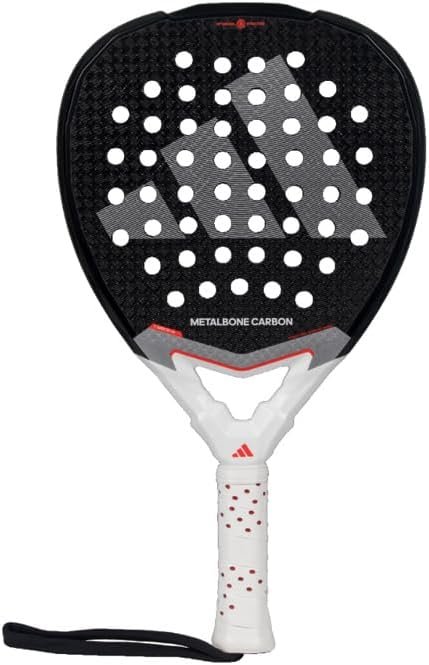
Adidas Metalbone Carbon 3.4 Padel Racket 2025
2025–2026 Amazon-available examples to compare (same mass class, different balance): Bullpadel Vertex 04 (head-heavy leaning) for baseline drives; NOX AT10 Luxury Genius 18K (more neutral) for balanced control-to-attack transitions; Adidas Metalbone Carbon (often adjustable/variable balance via weight system) for tuning inertia toward your preferred swing speed. If you rely on wristy flicks and rapid volleys, stay head-light to keep reaction control high; if your game is build-up then finish, shift toward head-heavy for extra momentum through contact.
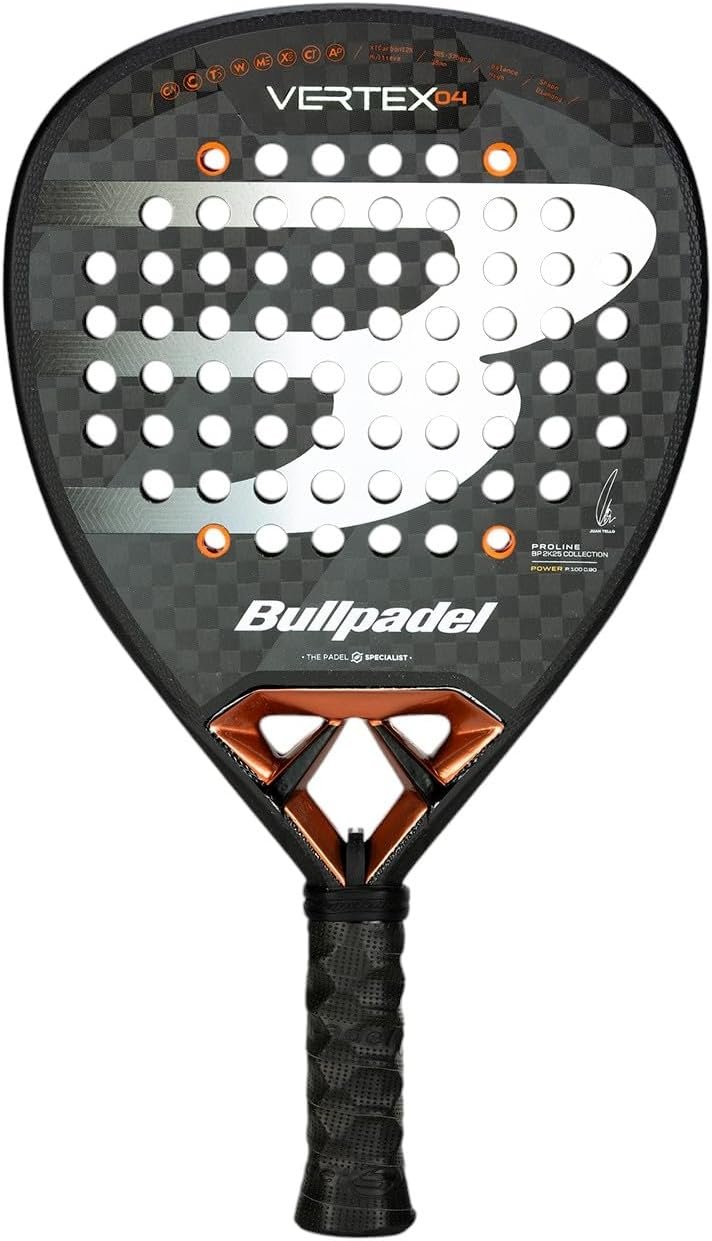
BULLPADEL Padel Racket Vertex 04 2025 Juan Tello | Professional Diamond Shape Pala Padel | Xtend Carbon 12K & MultiEva Core | Curvaktiv & Air Power Frame...
Sweet spot size and off-center hits: what heavier frames do to stability
Pick a frame around 370–385 g (unstrung equivalent) if your main goal is stability on off-center hits; the extra inertia reduces twisting and keeps the face from opening when contact drifts outside the sweetspot.
When impact lands near the edge, what matters is rotational resistance: higher weight plus a slightly head-biased balance increases momentum through the ball and lowers the “wobble” that steals control. In practice, players usually feel fewer sudden vibrations and less loss of direction on defensive blocks, because the frame doesn’t get pushed around as easily.
Use this quick setup guide for real play: for maximum stability with manageable maneuverability, target 370–380 g and a mid balance; for extra forgiveness on late contact, push toward 380–385 g with a slightly higher balance, but expect a slower swing start and more fatigue in fast exchanges. If rapid hand speed at the net is priority, stay closer to 360–370 g and add protection tape at 12 o’clock to boost inertia without killing maneuverability.
2025–2026 Amazon examples often stocked in new drops: Nox AT10 Luxury Genius 18K Alum (2025) and Adidas Metalbone (2025/2026 editions)–both are commonly chosen for strong torsional stability and predictable control when the ball clips outside the sweetspot. For a softer, more damped feel that still holds shape, Bullpadel Hack 04 (2025) is frequently listed with upgraded anti-vibration tech that helps off-center comfort without sacrificing momentum.
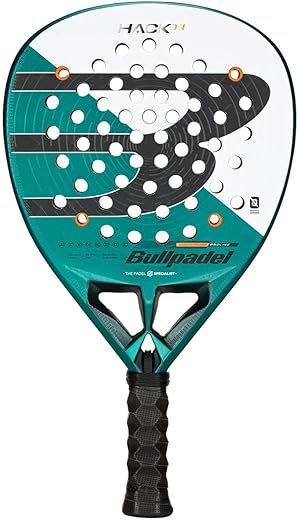
BULLPADEL Padel Racket HACK 04 2025 Paquito Navarro | Professional Diamond Shape Pala Padel | TriCarbon 3D & MultiEva Core | Total Channel Aerodynamics &...
Power on flat hits vs topspin/slice: which benefits more from extra grams
Recommendation: add 5–15 g (or shift balance 5–10 mm toward the head) mainly if your game relies on flat hits; for topspin/slice, prioritize faster maneuverability and a clean, high-rpm swing over raw mass.
Flat hits profit most from extra weight because the ball leaves with higher pace when the frame keeps its line at contact. In practice, added grams raise stability and reduce twisting, so the sweetspot “feels wider” on off-center strikes. Target numbers: a modest jump in inertia (≈ +5 to +15 kg·cm²) is often enough to notice firmer punch without losing too much control. If you already hit cleanly, a head-leaning setup (higher balance) rewards a short, direct swing with deeper, faster drives.
Topspin and slice benefit less from added grams because spin comes from racquet-head speed and brushing contact. Too much inertia can slow the swing, lowering rpm and making it harder to “wrap” the ball for topspin or carve a late slice. A slightly lower balance (more handle-biased) tends to improve maneuverability, letting you accelerate through the last 20–30 cm of the path–where spin is created–while keeping control on defensive shots and quick exchanges.
If your flat drive is landing short, add grams; if your spin shots float or arrive slow, reduce inertia (or move balance back) to regain head speed. Also note the trade-off: higher stability helps slice stay low against hard balls, but only if it doesn’t cost late acceleration.
| Shot type | What extra grams help | What can go wrong | Best setup focus |
|---|---|---|---|
| Flat drive / flat volley | Higher stability, less twisting, bigger usable sweetspot, cleaner line through contact | Slower reaction in fast exchanges if maneuverability drops too much | Moderate weight increase (+5–15 g) or slightly higher balance; keep control with a compact swing |
| Topspin | Some plow-through on heavy balls if speed is maintained | Lower rpm from reduced swing speed due to high inertia | Handle-biased balance; prioritize maneuverability and fast acceleration |
| Slice | Firm contact and less flutter when blocking pace | Late contact and “dragged” finish if inertia is excessive | Moderate weight + strong control; avoid extreme head bias |
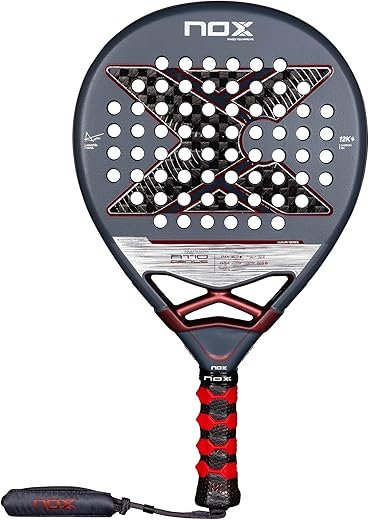
Padel Racket AT10 Genius 12K by Agustin Tapia 2025 | Luxury Series Teardrop Pala Padel | EOS Flap Aerodynamics & Custom Grip Technology | Carbon with MLD...
Amazon 2025–2026 examples to match this logic: for flat-focused players, look at models like Wilson Bela Pro V3 or HEAD Speed Pro 2025 (typically higher stability and a firm response). For spin-first players, consider quicker-handling options such as Nox AT10 12K 2025 or Adidas Metalbone 2025 in a setup that preserves maneuverability and manageable inertia.
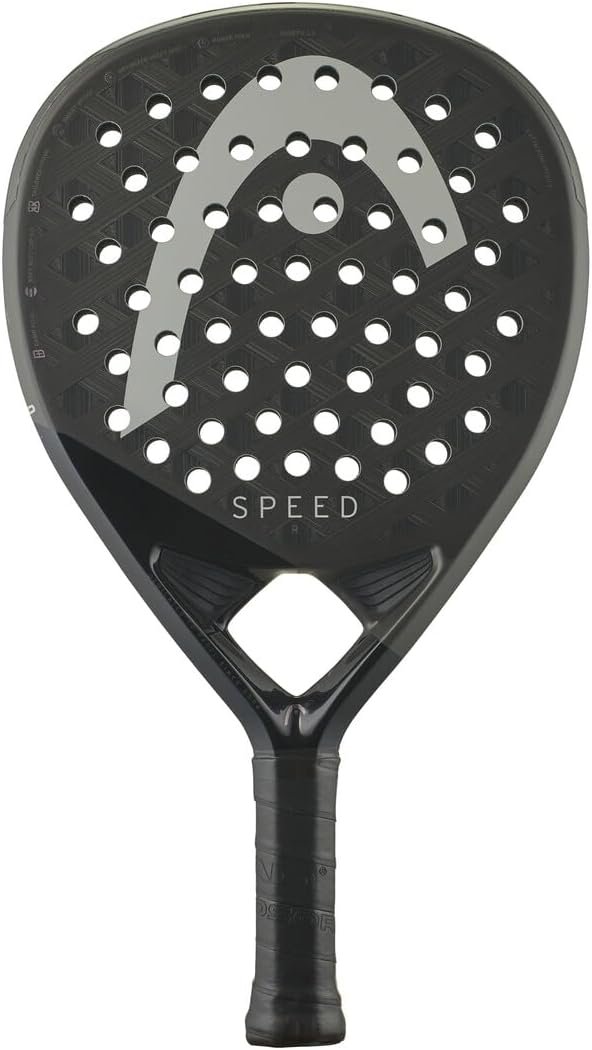
HEAD Speed Padel Racket Paddle Series (Pro, Pro X, Motion, Elite, ONE, ONE X, Team)
How surface materials and core density can outweigh “grams on the label”
Prioritize face material + core density over the number printed on the frame: a 365 g setup with a stiff carbon face can feel “bigger” in momentum and inertia than a 380 g option with softer fiberglass and a low-density EVA core, especially during a fast swing at the net.
Surface material changes rebound and perceived punch. A 12K–18K carbon face (common on 2025–2026 Amazon listings such as HEAD Extreme Pro 2025 and Wilson Bela Pro V3 (2025/2026 stock)) typically transfers energy faster than fiberglass, so contact feels crisp and direct. This can shrink the effective sweetspot if your timing is off, but it improves directional control on volleys and overheads. If your priority is easier depth without “boardy” impact, look for hybrid faces (carbon + fiberglass) or textured carbon with slightly softer layups, often marketed as “comfort carbon” or “flex carbon.”
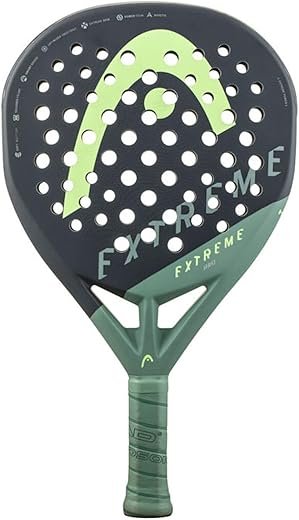
HEAD Extreme Padel Racket Paddle Series (Elite, Motion, One, Pro) | Paddle, Series
Core density decides what happens on off-center hits. High-density EVA (often labeled “Hard/Pro EVA”) boosts stability and keeps the face from over-deforming, which helps block returns under pressure. Medium-density EVA increases maneuverability feel because the ball sits a fraction longer, making touch shots simpler and widening the practical sweetspot.
Balance beats scale readings for on-court effort. Two frames with identical mass can play completely different if one is head-loaded: head-loaded builds add momentum but raise inertia, costing quick exchanges and reducing late-adjustment control. For fast defense and quick counter-volley swing, target a lower or even balance and rely on carbon stiffness for response rather than mass at the tip. For smash-oriented players, a slightly higher balance paired with a not-too-hard core can maintain stability without feeling like a club.
Concrete shopping checks (useful in 2025 Amazon specs): pick a model that lists carbon layup (3K/12K/18K), EVA density (soft/medium/hard), and ideally balance point in mm. If balance isn’t listed, look for phrases like “head heavy” or “even balance”. Examples often available in 2025–2026 Amazon catalogs: HEAD Extreme Pro 2025 (stiffer face feel), Wilson Bela Pro V3 (firm, precise), adidas Metalbone (2025 series) (carbon-focused response), and Nox AT10 2025 (known for consistent sweetspot tuning depending on core version).
Upsides of Heavier Padel Rackets: When More Weight Helps
Pick a 370–390 g frame if fast balls push your shots around and volleys feel shaky at the net–extra weight boosts stability and keeps the face from twisting on off-center contact.
Higher mass increases momentum through contact, so depth comes easier without forcing a bigger swing. For many intermediate-to-advanced players, moving from ~360 g to ~375 g can reduce “arming” the ball and improve shot length on defensive lobs and counter-drives, because the frame carries the ball with less effort per stroke.
Extra inertia can improve control when blocking hard attacks: the frame resists sudden deceleration, so the face angle stays consistent. This is especially useful for compact punch volleys and “catch-and-place” returns, where too-light builds often flutter. If your timing is solid, the added inertia also helps stabilize the sweetspot feel–misses still travel with usable pace instead of dying short.
Weight can also help with directional accuracy on smashes and bandeja-style overheads: a slightly slower, heavier swing tends to track a cleaner line, and stability reduces micro-rotation at impact. Practical tip: if maneuverability is still acceptable, prioritize a head-light balance with higher total mass; that combo keeps hand speed while preserving the solid hit.
Examples worth checking (2025–2026 Amazon models): Bullpadel Vertex 04 (2025), Bullpadel Hack 04 (2025), Nox AT10 Luxury Genius 18K Alum (2025), Adidas Metalbone 3.4 (2025), Head Speed Pro (2025), Wilson Bela Pro V3 (2025). Aim for 370–385 g if you play frequent net blocks; 380–390 g fits aggressive overhead hitters with strong forearm endurance.
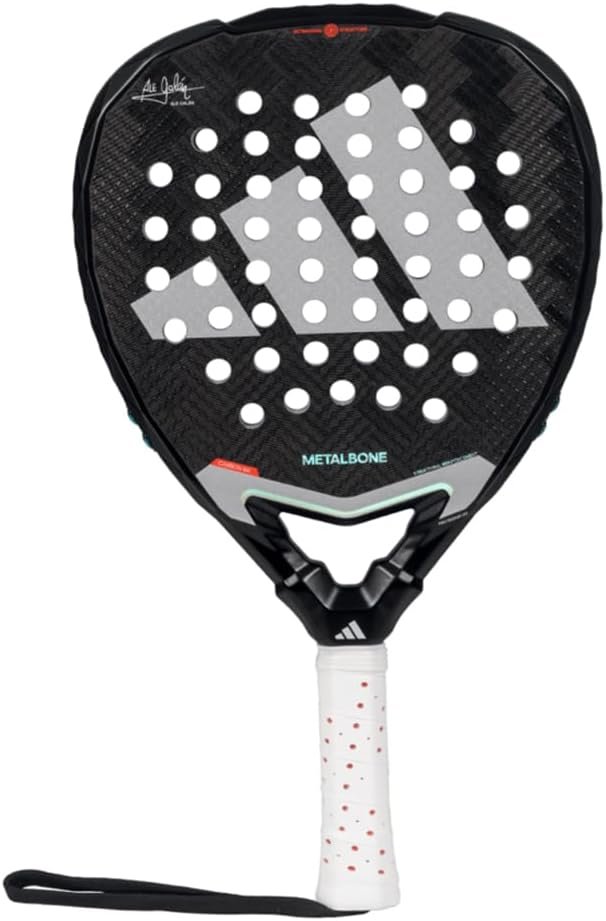
Adidas Metalbone 3.4 "ALE GALAN" Padel Racket 2025
Questions and answers:
Will a heavier padel racket automatically give me more power on my shots?
Not automatically. A heavier racket can help you hit harder because extra mass transfers more momentum to the ball, especially on flat drives and smashes where you can swing through cleanly. But power only shows up if you can accelerate the racket head fast enough and keep timing consistent. If the racket feels slow, you arrive late to the ball and the shot loses pace—sometimes it even comes out weaker than with a lighter model. Many players get “more power” from a medium weight that they can swing quickly for the whole match, rather than a heavy racket that feels strong for 20 minutes and then becomes hard to control.
What are the main downsides of going heavier—control, arm pain, slower reactions?
The most common trade-offs are speed and fatigue. Heavier rackets usually feel slower in fast exchanges at the net and on defensive blocks, because changing direction takes more effort. If your timing is slightly off, the heavier frame can also pull your contact point behind you, which reduces accuracy. For the body, extra weight can load the forearm, elbow, and shoulder—especially if you play with a stiff feel, hit lots of overheads, or have a head-heavy balance. If you’ve had tennis elbow, shoulder issues, or you play several times per week, staying in a manageable weight range often keeps you playing longer without pain.
Is racket weight the same thing as balance? I see “head-heavy” and “handle-heavy” mentioned a lot.
They’re related but not the same. Weight is the total mass (for example 360 g). Balance describes where that mass sits. Two rackets can weigh the same, but the head-heavy one will feel harder to swing and will hit “heavier” on contact because more mass is concentrated toward the top. A handle-heavy racket can feel quicker and easier on the arm while still being the same total weight. If you want more punch without losing too much speed, a small move in balance (slightly more toward the head) can change feel more than adding 10–15 grams to total weight.
I’m a beginner/intermediate player—what weight range should I look at, and how do I choose without guessing?
A practical starting point is: many intermediate men feel comfortable around 360–375 g, and many intermediate women around 340–360 g, but your strength, injury history, and play style matter more than gender. If you defend a lot and play quick volleys, lean toward the lighter side or a more handle-heavy balance. If you play from the back and rely on smashes and aggressive drives, you can test slightly heavier or a bit more head weight. The simplest way to choose is to test two similar rackets (same shape and materials) that differ by about 10–15 g or by balance. Warm up, then do: fast volley exchanges, defensive lobs, and 10–15 overheads. Pick the one that still feels quick and stable after 30–40 minutes, not just the first five minutes.
Can I “make” my racket heavier for more power (overgrips, protector tape, lead tape), and where should I add weight?
Yes, but small changes matter. Adding an overgrip increases weight mostly in the handle, which can improve comfort and keep the racket feeling fast. A frame protector adds a little weight toward the head, which can raise stability and give shots a heavier feel, but may slow reactions. Lead tape lets you fine-tune: weight near the top boosts punch on overheads but stresses the arm more; weight on the sides can add stability on off-center hits; weight on the handle can make the racket easier to swing while still increasing total mass. Add in tiny steps (2–4 g), test for a full session, and stop if you notice elbow or shoulder soreness.
Do heavier padel rackets really give more power, or is it just a “feel” thing?
Heavier rackets can add power, but mostly in specific situations. With more mass, the racket can carry more momentum through the ball, so flat drives, volleys, and overheads may come off deeper with less “whip” from your arm. You’ll notice it most when your timing is clean and you can accelerate the racket head without slowing down.
I’m getting elbow/shoulder fatigue with a heavier racket. Should I drop weight, or change balance instead?
If your elbow or shoulder starts talking after a session, treat it as a fit issue, not something to “push through.” A heavier setup raises the load your joints handle during fast exchanges, especially on blocked volleys and defensive lobs where you react late and can’t use your legs and torso as much.



No Comment! Be the first one.