


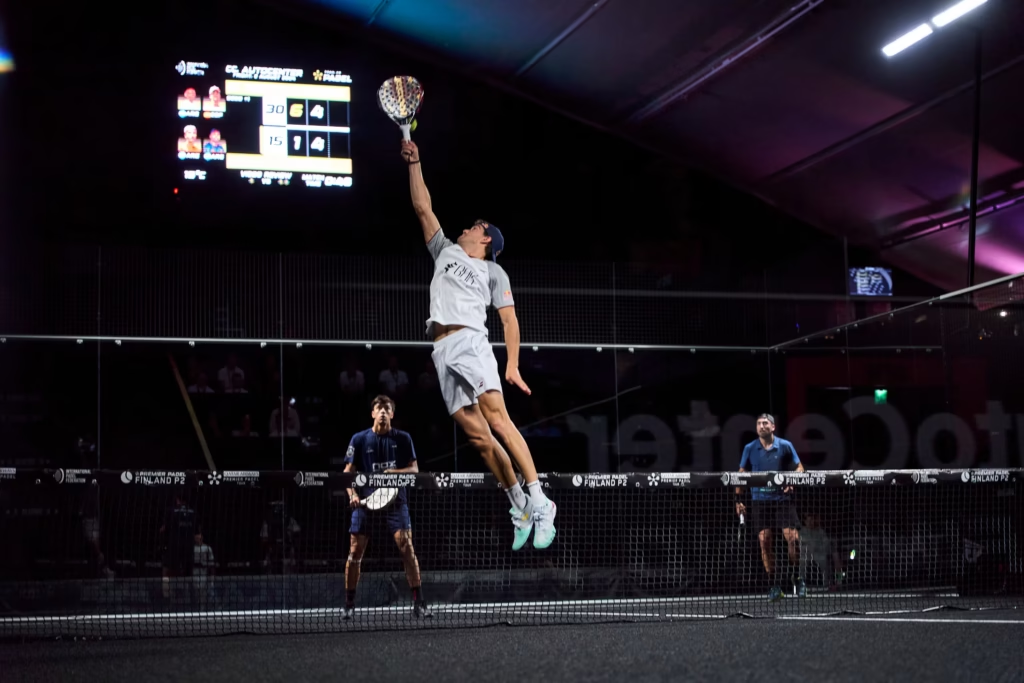
Power Padel Rackets for Advanced Players are designed for athletes who demand maximum power, precision, and control on the court. Choosing the right racket can significantly enhance your offensive play, smash accuracy, and overall performance during high-level matches.
Table Of Content
- Are Power Padel Rackets Better for Advanced Players? Pros, Cons & Expert Tips (2025–2026)
- Decision Framework: When Power Rackets Make Sense for High-Level Padel
- How “power” is defined in 2025–2026 models (core density, face materials, balance)
- Advanced-player checkpoints: swing speed, contact point stability, and volley tolerance
- Match scenarios where power frames outperform control frames (wind, fast courts, heavy balls)
- When power rackets hurt results: rushed defense, off-center hits, and tight net exchanges
- FAQ — Power Padel Rackets for Advanced Players
- Match racket stiffness, carbon layup, and weight to your repeatable timing to avoid harsher mishits and tighter sweetspots.
- Target 360–375 g and medium-to-high balance only if your wrist and shoulder tolerate repeated overheads and fast exchanges.
- Choose shape by scoring pattern: diamond/teardrop for overhead power, round/teardrop hybrid for placement and transition play.
- Validate with drills: volley/lob consistency and overhead depth checks before committing to a firmer, head-heavy power frame.
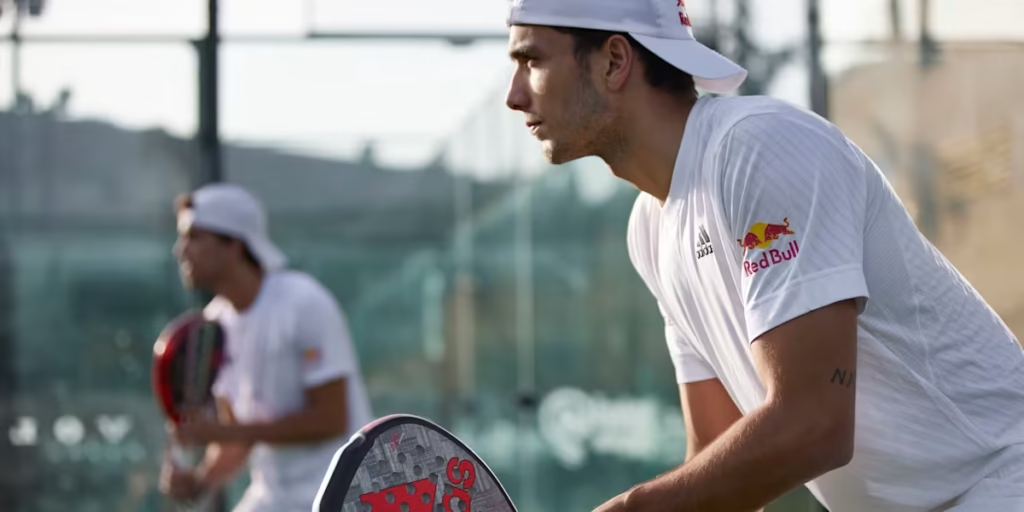
Choose a high-output, stiff frame only if you already generate your own pace with clean technique; otherwise you’ll trade control and precision for random depth and more unforced errors. A practical threshold: if your typical bandeja/víbora pace is stable and you can place 7–8 out of 10 balls into a 1×1 m target under pressure, a more aggressive build can help you finish points faster without breaking your patterns.
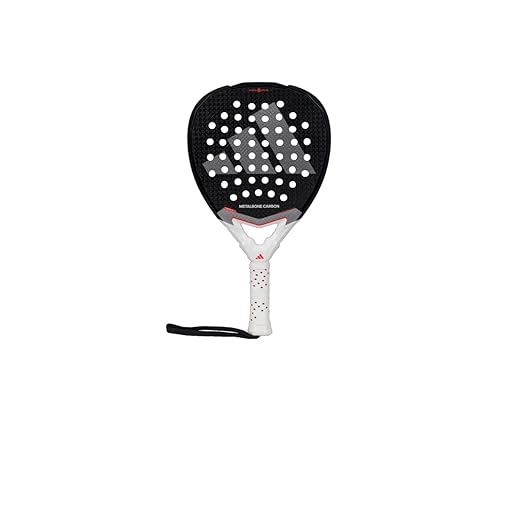
Adidas Metalbone Carbon 3.4 Padel Racket 2025
Look first at stiffness + carbon layup and how they interact with your swing. In 2025–2026 lines on Amazon, models such as Nox AT10 Luxury Genius 18K Alum (2025), Bullpadel Hack 04 (2025), HEAD Extreme Pro (2025), and Adidas Metalbone Carbon 3.4 (2025) commonly use higher-density EVA and premium carbon faces to boost rebound. The trade-off is a tighter sweetspot: mishits feel harsher and launch angles vary more, so your timing must be consistent, especially on volleys and overheads.
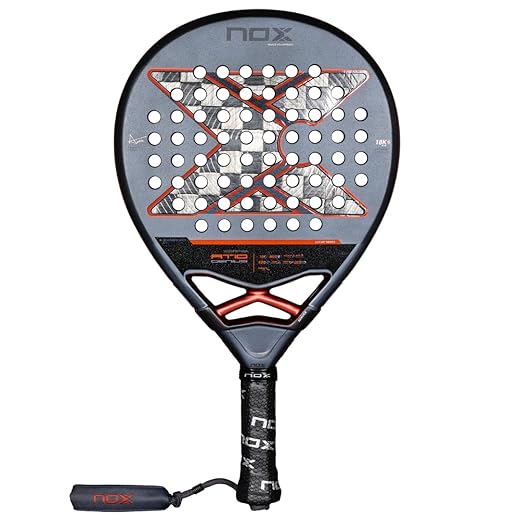
Padel Racket AT10 Genius 18K Alum by Agustin Tapia 2025 | Luxury Teardrop Pala Padel | Enhanced EOS Flap & NOX Custom Grip Technology Dual Texture Spin...
Weight and balance decide whether the “extra punch” is usable. As a starting setup, many competitive athletes perform best around 360–375 g finished weight with a medium-to-high balance (head-heavier) when they want faster finishing at the net–provided their shoulder tolerates it. If your defense relies on quick resets from the back glass, prioritize a slightly lower balance or a marginally lighter build to keep reaction speed and control; you can still get penetration via efficient technique rather than sheer mass.
Pick shape by your scoring pattern, not marketing. Diamond/teardrop geometries usually reward forward-weighted swings and overhead dominance, but they punish late contact by shrinking the usable sweetspot. If your game is built on placement, transitions, and sharp angle changes, a teardrop with a more centered balance often preserves precision while still giving enough pace. Treat “more stiffness” as a tool: it can elevate winners only when your timing, grip pressure, and contact point are already repeatable.
Are Power Padel Rackets Better for Advanced Players? Pros, Cons & Expert Tips (2025–2026)

Choose a head-heavy, high-stiffness frame with carbon faces only if your technique is stable under speed; otherwise, pick a medium balance option to keep control and precision in defensive phases.
What you gain with “attack-first” frames (2025–2026): more depth on vibora/bandeja and easier winners on high balls, especially when the sweet spot sits higher and the core is firm. Look for 12K–18K carbon and a firmer EVA: it transfers energy efficiently, but it also punishes late contact. In practical terms, most competitive users feel the sweet spot shrinks as stiffness rises, so timing must be sharp to keep precision.
What you risk: reduced maneuverability at the net and slower reaction blocks if the weight and top-heavy balance are too aggressive. As a quick rule, stay around 360–375 g if you play many fast exchanges; go heavier only when your wrist/forearm conditioning is solid and your counter-volley timing is consistent. If your lobs and resets drift long, it’s usually a sign the frame is too stiff or too head-loaded relative to your current technique.
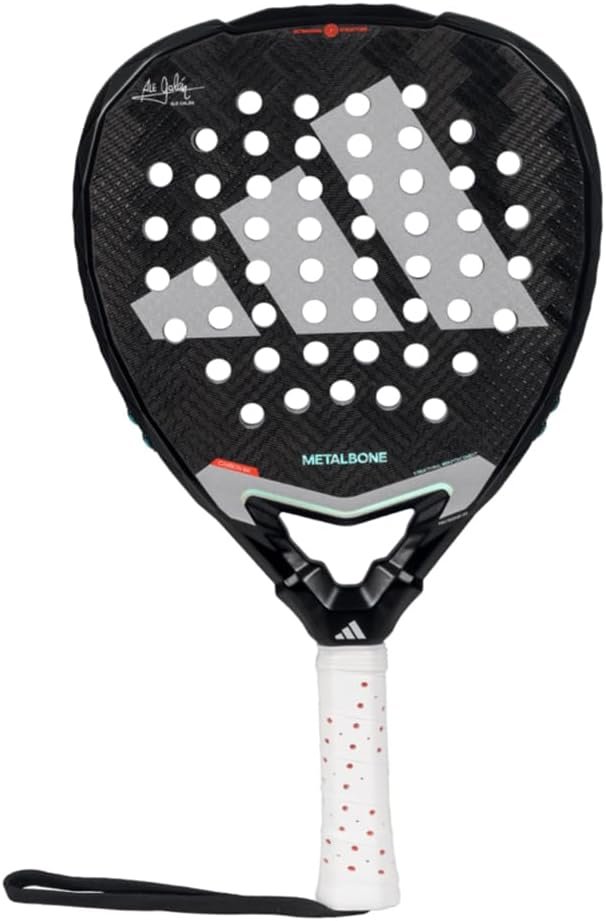
Adidas Metalbone 3.4 "ALE GALAN" Padel Racket 2025
Amazon-ready picks (2025–2026 model lines to shortlist): consider the Adidas Metalbone 3.4 (2025) if you want adjustable weight/balance; it lets you tune punch without losing too much control. The AT10 Genius Attack 18K (2025) leans toward precision with a more playable response while still offering strong finishing power. The HEAD Extreme Pro (2025) suits hitters who like a firmer feel and direct feedback; just keep an eye on maneuverability in fast hand battles.
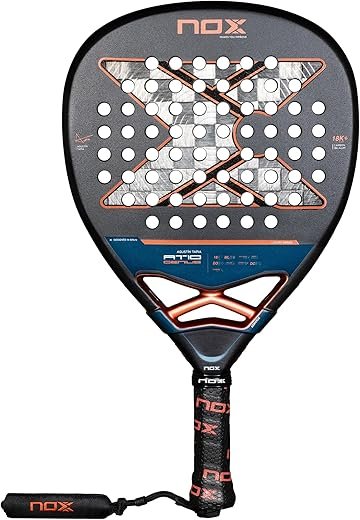
Padel Racket AT10 Genius Attack 18K by Agustin Tapia 2025 | Luxury Diamond Shape Pala Padel | Exclusive Spin & EOS Flap Technology | Aluminized Carbon w/MLD...
2025–2026 setup tips to keep control while hitting harder: use overgrip layering to micro-adjust balance toward the handle and regain maneuverability; add one thin overgrip first, then reassess volley timing. If the frame feels too pingy, switch to a slightly softer ball or reduce swing speed on defensive blocks–your technique should aim for compact strokes to preserve precision. When you can consistently place volleys deep cross-court under pressure, you’re ready to fully exploit the extra stiffness without sacrificing control.
Decision Framework: When Power Rackets Make Sense for High-Level Padel
Choose a punchier, head-heavier hitting frame only if you consistently win short-point exchanges: fast volley-to-smash patterns, quick counterattacks off the glass, and finishing overheads from mid-court. If your match stats show you end points with overheads (x3/x4 attempts or strong bandeja/víbora pressure) and your unforced error rate stays low under pace, this category fits your game.
- Technique gate: You should be able to generate pace without “arming” the swing. If your technique keeps the elbow stable and you can accelerate smoothly, added stiffness won’t punish you.
- Control gate: In warm-up, hit 30 lobs + 30 chiquitas. If depth and height remain consistent, your control is good enough to handle extra rebound.
- Precision gate: You must place volleys to the fence and target feet under pressure. If your precision drops when defending, pick a more forgiving shape.
Dial the specs with measurable targets. Aim for weight around 360–375 g (unstrung/marketing numbers vary), and set balance to head-heavy only if your wrist and shoulder tolerate repeated overheads. If you feel late on quick hands battles at the net, stay closer to medium balance and prioritize maneuverability.
- Sweetspot check: A smaller sweetspot is acceptable only if you contact cleanly on volleys and overheads. If you miss-center more than 3–4 times per game during fast rallies, you’ll leak points.
- Material choice: High-modulus carbon faces + firm EVA reward clean impact but amplify mishits. If you train 2–4x/week and play tournaments, that trade-off can be worth it.
- Stiffness tolerance: If you’ve had elbow/shoulder irritation, avoid ultra-firm builds; choose a slightly softer layup or add an overgrip and vibration-damping protector.
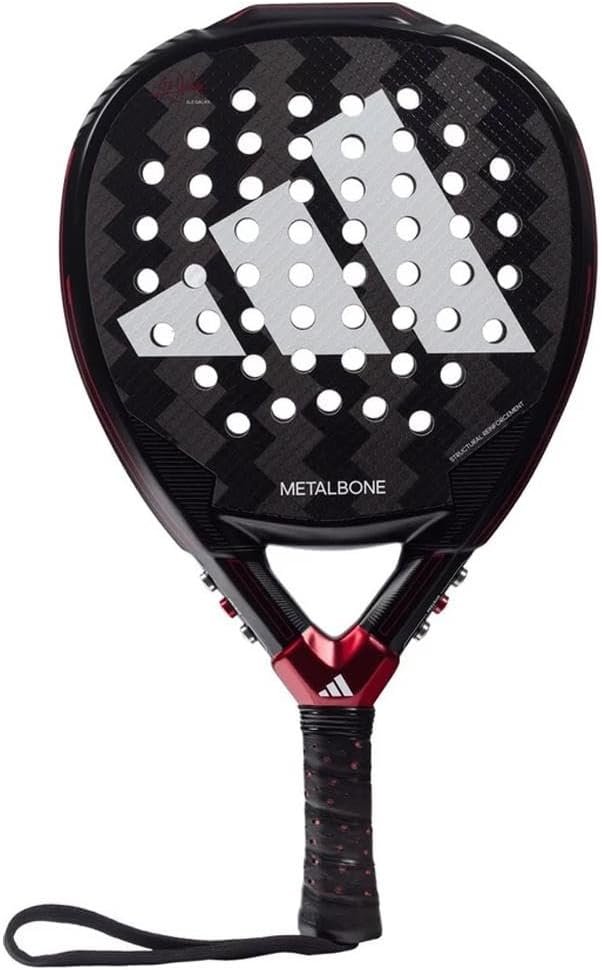
Adidas Metalbone Padel Racket Paddle Series
2025–2026 Amazon-available examples to shortlist (use these as reference points when comparing specs): HEAD Extreme Pro (2025) for firm response and aggressive overheads, Adidas Metalbone 3.3 (2025) if you want tunable balance/weight via removable weights, Nox AT10 Genius Attack (2025) when you want a strong hit with more predictable placement, and Babolat Technical Viper (2025) if you thrive on fast finishing and accept a tighter sweetspot.
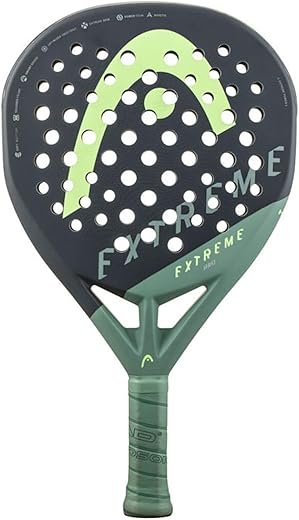
HEAD Extreme Padel Racket Paddle Series (Elite, Motion, One, Pro) | Paddle, Series
Final decision rule: pick this type only when you can keep rally placement stable while adding pace–meaning your precision doesn’t collapse, your technique stays relaxed on defense, and your match results improve specifically on overhead conversion and counterattacking from the back wall.
How “power” is defined in 2025–2026 models (core density, face materials, balance)
Pick a 2025–2026 paddle with hard/medium-hard EVA (≈ 13–17 kg/m³), a carbon face, and a head-heavy balance (≈ 265–275 mm) if you want faster exits on smashes without losing too much control. This combo increases rebound speed and keeps precision acceptable, provided your technique is stable on volleys and overheads.
Core density is the main “engine” in 2025–2026 lines: hard EVA gives higher rebound but demands cleaner contact; multi-density EVA (often marketed as dual/tri-layer) aims to add touch on slow balls while staying lively on fast swings. If you struggle with timing, choose medium EVA to protect control; if you consistently hit the sweet spot, hard EVA plus higher stiffness gives a more direct, explosive response.
Face materials now separate “easy output” from “true hitter’s feel.” 12K–18K carbon and carbon-aluminum blends raise stiffness and reward compact, fast swings with crisp precision. 3K carbon is usually slightly softer and more forgiving, improving maneuverability and comfort in quick exchanges. On Amazon 2025–2026 listings, look for explicit weave specs (3K/12K/18K) and “full carbon frame” claims; if the page only says “carbon-like,” expect less consistent response under pressure.
Balance and weight decide whether the extra rebound is usable in real points. Target 360–375 g if you want strong hits while keeping hand speed; go above 380 g only if your arm can handle longer sessions and you still keep maneuverability at the net. Head-heavy setups amplify impact but can reduce reaction speed; a slightly head-light to even balance helps quick blocks and directional control without killing finishing ability.
Examples of 2025–2026 gear commonly found on Amazon include Bullpadel Hack 04 (2025), AT10 Genius Attack 18K (2025/2026 edition), Adidas Metalbone (2025), and HEAD Extreme (2025). As a practical filter: choose models listing hard EVA + 12K/18K carbon + 265–275 mm balance when you prioritize put-away shots; choose medium EVA + 3K/12K carbon + 255–265 mm balance when rally stability and control matter more.
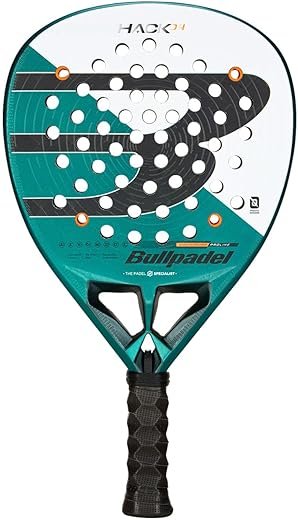
BULLPADEL Padel Racket HACK 04 2025 Paquito Navarro | Professional Diamond Shape Pala Padel | TriCarbon 3D & MultiEva Core | Total Channel Aerodynamics &...
Advanced-player checkpoints: swing speed, contact point stability, and volley tolerance
Choose a 12K–18K carbon face with medium–high stiffness only if your full swing stays fast without late contact. A practical checkpoint: if you can keep your last 20 overheads landing deep with consistent precision, you’re ready to benefit from a firmer face; if not, drop to a softer layup or add a bit more surface grip to regain control. Current Amazon 2025–2026 examples to compare in-hand: HEAD Extreme Pro (2025) and Wilson Bela Pro V3 (2025)–both reward speed but punish rushed timing when the contact drifts away from the sweetspot.

Wilson Bela V3 Padel Rackets - Grip Size 2-4 1/4"
Contact point stability starts with balance and torsional resistance, not hype. If the frame twists on off-center hits, your “stable feel” is gone even with perfect technique. Look for a design with reinforced shoulders and a firmer bridge; it should keep the face square when the ball arrives slightly late. Quick self-test: hit 30 medium-speed bandejas and note how many feel “wobbly” on the outside edge–more than 6/30 suggests you need either higher structural stiffness or a slightly lower head-heaviness to keep the impact clean and the sweetspot usable under pressure. Amazon 2025–2026 models often picked for this checkpoint: AT10 Genius Attack 18K (2025) and Adidas Metalbone HRD+ (2025), both known for solid feedback and measurable precision when your timing is tight.
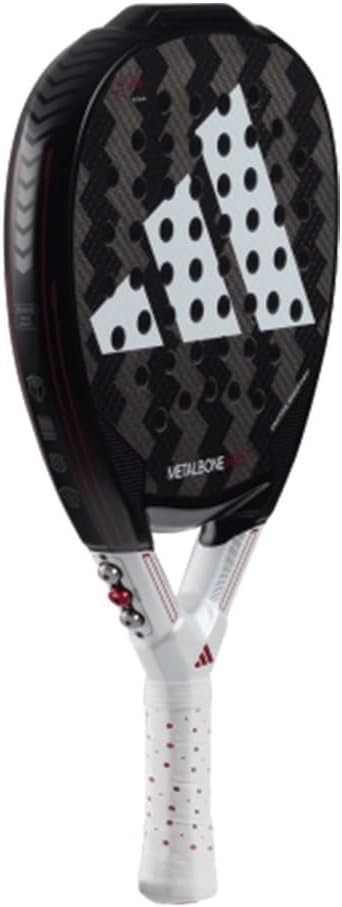
Adidas Metalbone Padel Racket Paddle Series
Volley tolerance is mainly about maneuverability plus predictable rebound in short strokes. If you lose blocks at the net, you likely have too much head weight or too lively a face. Aim for a setup that lets you “set” the face instantly: a slightly lower swing weight, neutral-to-mild head-heavy balance, and a face that doesn’t trampoline on compact volleys. Drill checkpoint: 50 rapid-fire forehand/backhand blocks from 2–3 meters–target 40/50 landing in a 1×1 m zone; if you’re under that, prioritize faster handling over extra punch. Amazon 2025–2026 references with strong net handling: Bullpadel Vertex 04 (2025) (fast response) and StarVie Metheora Dual (2025) (reliable control on short touch).
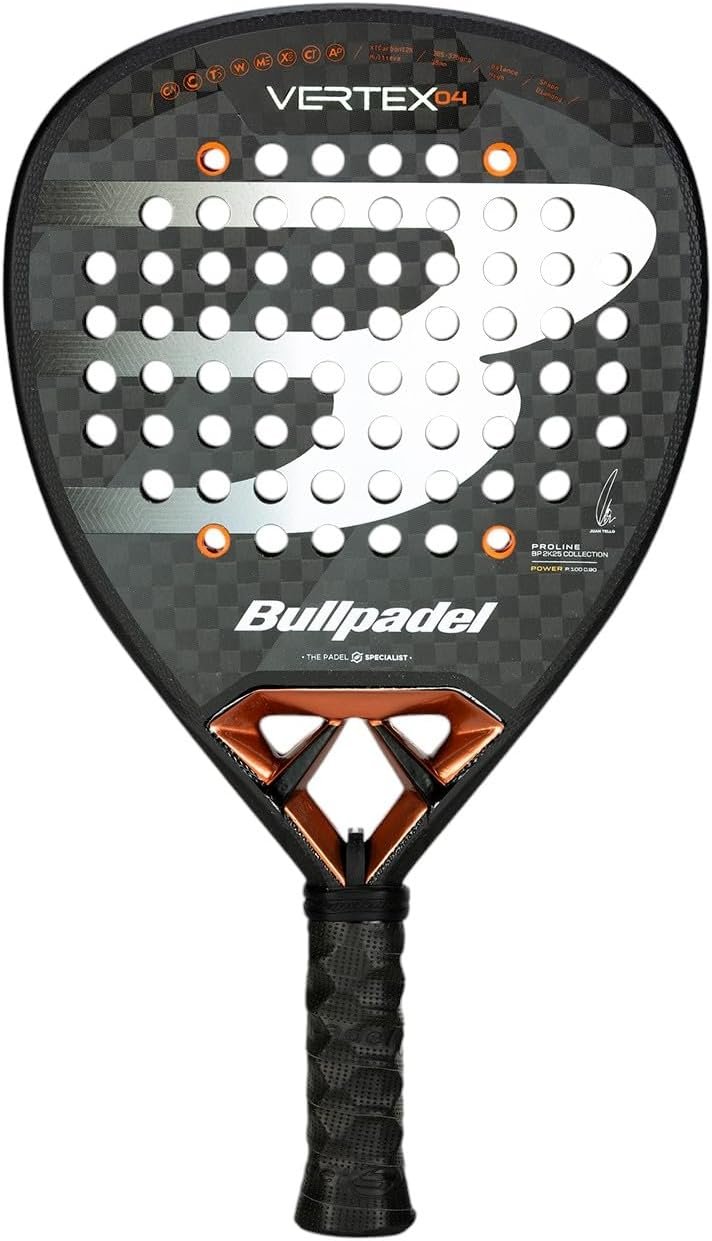
BULLPADEL Padel Racket Vertex 04 2025 Juan Tello | Professional Diamond Shape Pala Padel | Xtend Carbon 12K & MultiEva Core | Curvaktiv & Air Power Frame...
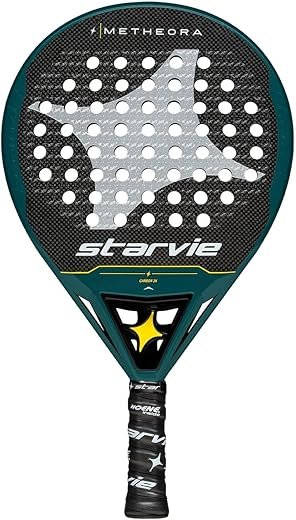
STARVIE METHEORA Dual
Match the spec to your technique, then validate it with numbers. If you swing fast but miss the center, pick a model with a more forgiving sweetspot rather than chasing maximum rigidity; if you strike cleanly, a firmer carbon face adds crisp precision without forcing you to “push” the ball.
Match scenarios where power frames outperform control frames (wind, fast courts, heavy balls)
Choose a head-heavy 2025–2026 carbon frame with medium-high stiffness and a slightly higher weight (around 360–375 g) when you expect gusty wind: it keeps the ball trajectory stable on viboras, bandejas, and flat drives. In crosswind, extra weight plus solid carbon layup reduces flutter at contact, so you don’t “lose” the ball off the face. Prioritize a model with a generous sweetspot to avoid mishits when the wind pushes your setup off-line; a wider sweetspot also helps keep consistent depth without over-swinging and ruining technique.
On very fast courts (new turf, low-grit surface, warm conditions), pick a faster-exit frame with a firmer face: higher stiffness returns more energy, so you can finish points with compact technique instead of long, loopy swings. Keep an eye on balance: head-heavy helps punch volleys through, but if maneuverability at the net drops, shift to a slightly more even balance and rely on the frame’s carbon response to keep pace. A practical target is “quick hands + solid punch”: stable weight distribution, easy redirection, and enough control to aim to the back glass rather than gifting floating balls.
With heavy balls (cold weather, humid indoor air, or waterlogged felt), the advantage shifts to frames that don’t get “stuck” in the contact. More stiffness plus a dense carbon face helps the ball rebound cleanly, especially on overheads and counterattacks from the back. If your current setup forces you to over-hit to reach the back wall, you’ll leak control under pressure; a firmer response lets you keep technique compact, conserve shoulder, and still generate depth. Look for a round-to-teardrop hybrid where the sweetspot sits a bit higher, making it easier to finish lobs without perfect timing.
Amazon (2025–2026) examples to shortlist: Nox AT10 Luxury Genius 18K Alum 2025 (stable balance, high carbon feel, dependable sweetspot), Babolat Technical Viper 2025 (crisp stiffness, direct ball exit on fast courts), and HEAD Extreme Pro 2025 (solid weight and punch with respectable maneuverability). Compare them by measured swing feel: if the head feels slow in quick exchanges, drop 5–10 g or choose a slightly lower balance; if the ball dies in cold/heavy conditions, move up in stiffness and face density.
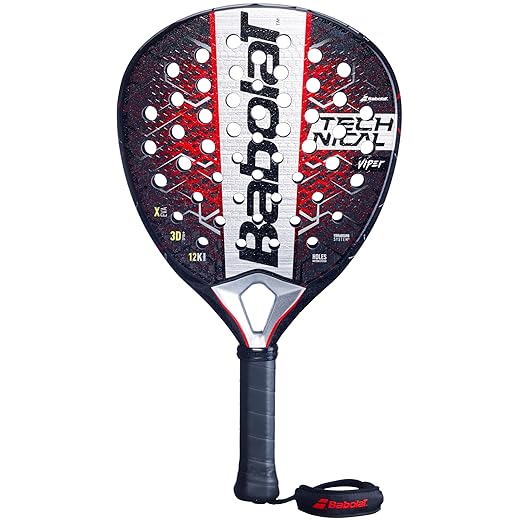
Babolat Technical Viper 2.5 Padel Racket
When power rackets hurt results: rushed defense, off-center hits, and tight net exchanges
Choose a round or teardrop 2025–2026 Amazon model with a medium balance and a clearly advertised larger sweetspot if you’re getting rushed in defense–this single change usually restores reaction time and control within 1–2 sessions. High head-heavy setups increase swing inertia, so your first block on fast viboras arrives late, and your “safe” lob turns into a short ball. Aim for ~355–370 g weight and a mid balance; you keep enough pace, but you gain maneuverability to reset under pressure.
Off-center hits punish stiff frames: when contact is outside the sweetspot, the face twists and the ball dies, especially with hard carbon layups. If your match stats show many “frame” touches on defense, prioritize a softer feel (medium EVA or “multi-density” cores) and a rough-but-not-sharp surface that helps precision on slower swings. Practical check: if you can’t consistently land 7/10 cross-court lobs deep from the glass using compact technique, your current setup is too demanding–drop stiffness or move to a more forgiving shape before adding speed again.
Tight net exchanges expose slow handling more than baseline rallies. In quick hands battles (volleys, jammed bandejas, surprise body shots), a head-heavy option makes micro-adjustments late, so you end up poking instead of guiding. Look for 2025–2026 Amazon listings that specify “fast handling,” “anti-vibration,” and “mid balance,” and avoid extreme top-weight. Net drill benchmark: in a 60-second rapid-volley feed, if your contact point drifts behind your front hip, you need higher maneuverability and slightly lower swing weight to keep the face stable and your control clean.
FAQ — Power Padel Rackets for Advanced Players
1. Are power padel rackets really better for advanced players?
Yes, but only if your technique is stable. Power rackets reward clean contact, fast preparation, and confident overhead play. Without consistent timing, they can increase unforced errors instead of winners.
2. What balance is best in a power racket for high-level padel?
Most advanced players benefit from a medium-to-high (head-heavy) balance, as it adds punch to smashes and volleys. However, if your game relies on fast defense and quick net reactions, a more even balance may perform better.
3. Do stiffer rackets reduce control?
Stiffer frames don’t automatically mean less control, but they do reduce forgiveness. They provide direct feedback and faster ball exit, which improves precision only when your contact point is consistent. Mishits feel harsher and are less predictable.
4. What weight should advanced players choose for power rackets?
A finished weight of around 360–375 g suits most competitive players. Heavier setups add stability and power but can slow reaction time and strain the arm if conditioning isn’t sufficient.
5. When should an advanced player avoid a power-oriented racket?
Avoid power rackets if you struggle in fast net exchanges, miss the sweet spot frequently, or rely heavily on defensive lobs and resets. In those cases, a more forgiving shape and softer feel will produce better match results.



No Comment! Be the first one.