


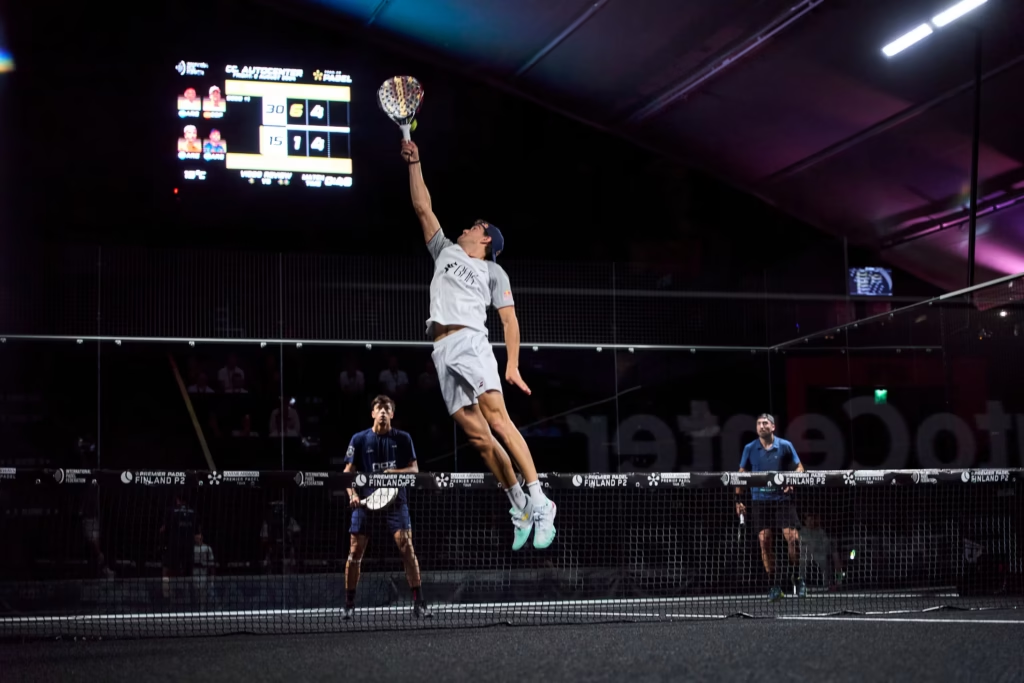
Power vs Control Padel Rackets is one of the most important comparisons for players who want to improve their performance on the court. Choosing between power and control directly affects your playing style, shot accuracy, and overall confidence during matches. Power padel rackets are designed for aggressive players who rely on strong smashes and fast attacks, while control rackets offer superior precision, stability, and consistency for tactical play. Understanding the differences between Power vs Control Padel Rackets will help you select the perfect option that matches your skill level, strengths, and game strategy.
Table Of Content
- When Power Padel Rackets Feel Harder (and When They Don’t)
- Sweet Spot Size: How Diamond/Teardrop Shapes Punish Off‑Center Hits
- Balance & Swing Weight: Why Head‑Heavy Frames Slow Reaction at the Net
- Face Hardness & Core Density (2025–2026): How 12K–18K Carbon and EVA Variants Change Ball Output
- Shot Scenarios: Vibora, Bandeja, Smash–Which Ones Become Riskier with Power Builds
- Control Frames Under Pressure: What You Give Up in Put‑Away Speed and Deep Lobs
- Choosing the Right Type by Skill, Style, and Court Role
- Questions and answers
- Are power padel rackets actually harder to use, or is that just a myth?
- Does a power racket reduce control on volleys and defense at the back of the court?
- Prefer balanced or slightly head-light rackets with larger sweetspot for accuracy and maneuverability under pressure.
- Stiff, head-heavy frames reward clean center hits but punish off-center strikes with more vibration and reduced precision.
- Teardrop heads offer medium sweetspot forgiveness; diamond shapes concentrate mass and demand cleaner technique.
- Choose 12K carbon with medium/soft EVA for forgiveness; 18K with harder EVA for crisper output if your timing is consistent.
- For net play pick even or handle-biased balance to improve reaction speed and reduce swing weight delays.

In practice, the “hard-to-handle” feeling comes from two measurable traits: stiffness (harder faces rebound faster but transmit more shock) and a smaller effective sweetspot (often linked to harder surfaces and head-heavy balance). If your technique isn’t stable–especially on blocked volleys, lobs under load, and defensive digs–choose a model marketed for higher forgiveness (softer touch, wider center response) before chasing extra pace.

Adidas Metalbone Padel Racket Paddle Series
Concrete 2025–2026 Amazon picks to compare: NOX AT10 Luxury Genius 18K Alum (2025) as a reference for all-court handling and consistent precision; adidas Metalbone 3.3 (2025) or Bullpadel Vertex 04 (2025) when you want a firmer, faster face–expect less forgiveness unless your timing is sharp; and Head Speed Motion (2025) if you prioritize maneuverability without sacrificing too much output. Use this rule: if you miss the center more than ~1 in 4 balls during fast exchanges, prioritize a larger sweetspot and lower perceived stiffness; once your technique keeps contact consistent, upgrade to a more aggressive setup for extra pace without losing accuracy.
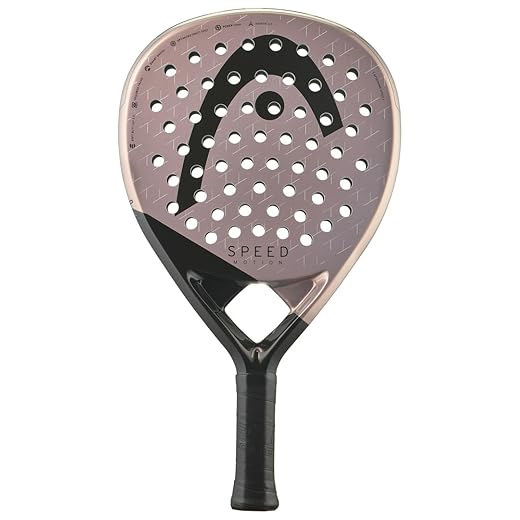
HEAD Speed Padel Racket Paddle Series (Pro, Pro X, Motion, Elite, ONE, ONE X, Team)
| Model | Focus | Balance | Sweetspot | Player Type |
|---|---|---|---|---|
| NOX AT10 Luxury Genius 18K Alum (2025/26) | Control / All-court | Medium / Neutral | Large | Precision & consistency |
| Head Speed Motion (2025) | Control / Maneuverability | Medium | Medium | Quick reactions & net play |
| Head Speed Pro (2025) | Control | Medium | Medium | Technical players seeking accuracy |
| Wilson Bela Series (2025) | Forgiving / Precision | Medium | Large | Defense & consistency |
| adidas Metalbone Carbon 3.3 (2025) | Power | Head-heavy | Small | Aggressive, fast balls |
| adidas Metalbone Carbon 3.4 (2026) | Power | Head-heavy | Small | Power finishing shots |
| Bullpadel Vertex 04 (2025) | Power | Head-heavy | Small | Competitive aggressive play |
| HEAD Extreme One (2025) | Power | Head-heavy | Small | High rebound, needs tech |
When Power Padel Rackets Feel Harder (and When They Don’t)
Choose a head-heavy, high stiffness frame only if you can consistently contact the ball in the center; otherwise, pick a slightly more even balance and a larger sweetspot to keep accuracy stable under pressure. Models on Amazon (2025–2026 lines) like the HEAD Extreme One 2025 and Adidas Metalbone 3.3 (2025 edition) tend to reward clean hits, but they can feel demanding when your timing is late or your swing is short.

HEAD Extreme Padel Racket Paddle Series (Elite, Motion, One, Pro) | Paddle, Series
They feel tougher in fast exchanges because reduced maneuverability makes last-second adjustments harder. If your volleys often land long or into the net, it’s usually not “too much speed”–it’s drifting contact away from the sweetspot, where torsion increases and your precision drops. A quick self-check: if your off-center hits twist the face and the ball sprays wide, prioritize a slightly softer feel or a design known for stability, like the Nox AT10 Luxury Genius 18K Alum 2025 or Bullpadel Vertex 04 (2025), and keep your grip pressure moderate to protect control.
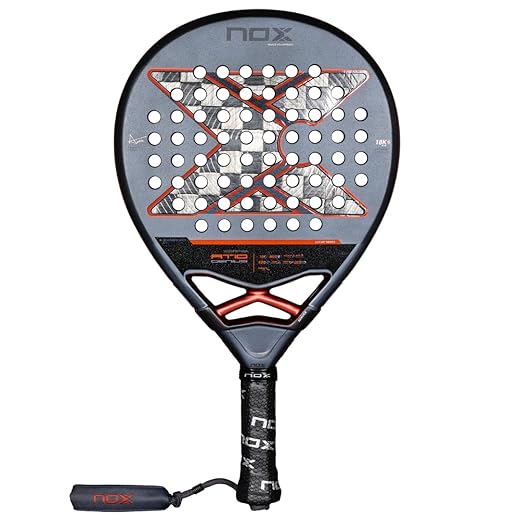
Padel Racket AT10 Genius 18K Alum by Agustin Tapia 2025 | Luxury Teardrop Pala Padel | Enhanced EOS Flap & NOX Custom Grip Technology Dual Texture Spin...
They don’t feel tougher when your technique matches the frame: early preparation, compact swing, and contact in front. With that, a firmer face can actually improve precision on aggressive volleys and overheads because the response is more predictable. If you’re already consistent on flat punches and you generate your own pace, the extra firmness becomes a tool for repeatable accuracy rather than a liability–especially when you choose an appropriate balance (not extreme) and the right weight for your arm speed.
Sweet Spot Size: How Diamond/Teardrop Shapes Punish Off‑Center Hits
Choose a teardrop head if you miss the center more than 2–3 times per rally; a diamond head will punish off‑center contact with bigger accuracy drops and harsher vibration. In real play, diamond geometry concentrates mass higher, shrinking the sweetspot and increasing twist on mishits–great for fast finishing shots, but demanding technique and precision when you’re late or stretched wide.
What changes with shape is not “feel” only–it’s measurable behavior: the farther the impact point is from the sweetspot, the more the frame wants to rotate. Diamond profiles typically amplify that rotation, so your ball leaves with less accuracy, less depth consistency, and more shock. If the face also has high stiffness (common in premium 2025–2026 releases), the response becomes even less forgiving: mishits feel sharper and your control drops faster under pressure.
- Diamond shape: smaller sweetspot, higher swing weight, lower maneuverability, demands cleaner technique for stable precision.
- Teardrop shape: medium sweetspot, more balanced handling, better forgiveness on defensive blocks and rushed volleys.
- Stiff faces (carbon-heavy builds): higher rebound consistency on center hits, but less forgiveness off-center; mishits “die” or spray wide more often.
For SEO 2025 searches like “diamond vs teardrop sweetspot size” and “off-center hits accuracy,” prioritize specs that directly protect your game: a medium balance, textured face only if you already have stable technique, and a frame that doesn’t feel board‑like. If you’re a progressing player, keep stiffness moderate and use a teardrop head to maintain control on imperfect contact without losing maneuverability at the net.
Examples of 2025–2026 models commonly found on Amazon that match these shape behaviors (check the exact head shape and balance in the listing):
- Wilson Bela series 2025 (often teardrop-oriented options in the line): stronger forgiveness with better all‑court precision when contact isn’t perfect.
- HEAD Extreme series 2025/2026 (frequent diamond variants): high stiffness and smaller sweetspot–excellent if your technique is consistent.
- Nox AT10 2025 editions (many teardrop-style offerings): predictable output and accuracy on blocks, lobs, and counterattacks.
- Adidas Metalbone 2025/2026 (commonly diamond): rewards center strikes; off‑center hits can cost depth and control quickly.
Quick tuning tip: if a diamond head feels too punishing, reduce string tension by ~1–2 kg (or the local equivalent) to gain forgiveness and expand the usable sweetspot. If a teardrop feels too “bouncy,” raise tension slightly to restore precision without sacrificing maneuverability.
Balance & Swing Weight: Why Head‑Heavy Frames Slow Reaction at the Net
Choose an even or slightly handle‑biased balance (about 260–270 mm from the butt cap) if your priority is fast volleys and blocks at the net; head‑heavy setups typically add 10–25 ms to reaction time because the tip carries more inertia and resists quick direction changes. In practice, that means you arrive late to rapid exchanges and your accuracy drops on reflex shots, even if your timing is good.
Net play is dominated by swing weight: a head‑loaded frame demands more torque to start and stop, so micro‑adjustments become slower. When the ball comes fast at shoulder height, you need maneuverability more than raw mass at the top. If you feel the head “pulling” your hand during quick counters, you’re fighting swing weight, not improving technique. A simple check: if you can’t perform 20 rapid forehand‑backhand blocks in a row without wrist fatigue, your current balance is likely too tip‑biased for net work.
Head‑heavy geometry also changes the usable sweetspot. Many players think extra weight up top increases stability, but it often shifts the sweetspot higher and narrows it, especially when combined with high stiffness. That reduces forgiveness on off‑center volleys: slight mishits twist the face, sending the ball long or into the net. If you want dependable placement, target medium stiffness (comfortably firm, not board‑like) and a sweetspot that sits closer to the middle so you can keep control on compact net swings.
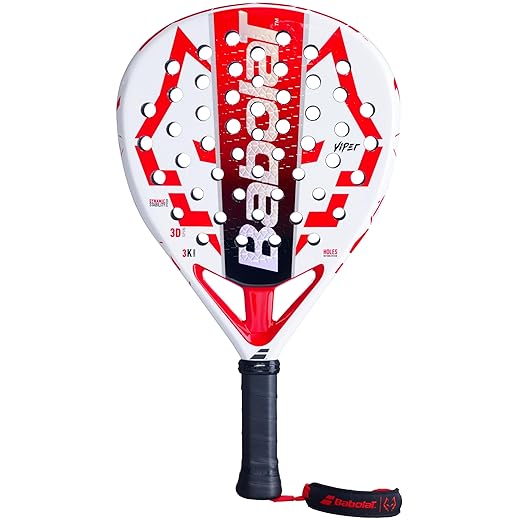
Babolat Technical Viper Juan Lebron Padel Racket (White/Red)
Concrete 2025–2026 picks on Amazon to consider (look for “balanced” or “head‑light” specs and mid swing‑weight in reviews): adidas Metalbone Carbon 3.4 (2025) set up with an even balance configuration for faster hands; Nox AT10 Genius 18K (2026 edition) for a broad sweetspot and reliable accuracy in quick exchanges; Babolat Technical Viper (2025) if you prefer crisp response but still want manageable maneuverability at the net. Avoid versions marketed explicitly as “head‑heavy” if you’re losing races on reaction volleys.
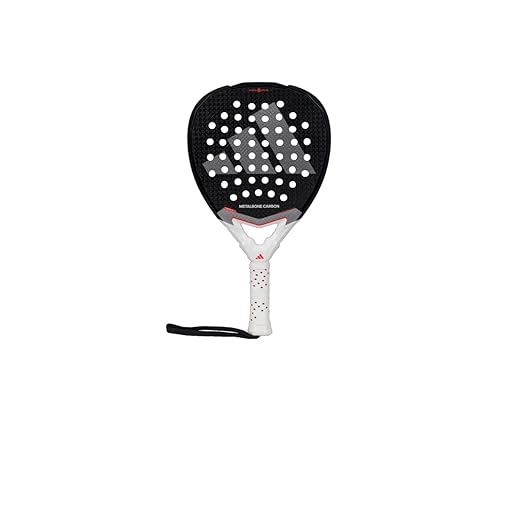
Adidas Metalbone Carbon 3.4 Padel Racket 2025
Face Hardness & Core Density (2025–2026): How 12K–18K Carbon and EVA Variants Change Ball Output
Pick a 12K carbon face with a medium EVA core if you want the safest balance of maneuverability, forgiveness, and clean ball output in 2025–2026. For most intermediate players, this combo gives a larger sweetspot and more predictable rebound than 18K + hard EVA, while still rewarding good technique with solid precision and accuracy.
12K vs 18K carbon (face hardness): 12K generally flexes a bit more, so it holds the ball fractionally longer on contact. That extra dwell time improves directional control and reduces “flyers” when you’re late or off-center–better forgiveness, easier depth management. 18K typically feels crisper and more “instant,” raising perceived stiffness. It can sharpen flat hits and volleys, but the margin for error shrinks: if your timing isn’t consistent, the launch angle varies more, and accuracy drops outside the sweetspot. Practical rule: choose 12K if you rely on placement and stability; choose 18K only if you already strike cleanly under pressure and want a faster, firmer response.
EVA density (core): Soft EVA boosts comfort and forgiveness, but it can add trampoline effect, making length harder to regulate at higher swing speeds. Medium EVA is the best “daily driver” for 2025–2026: it keeps maneuverability and touch, while staying predictable in defense and transition shots. Hard EVA increases stiffness and direct rebound; you’ll get a more linear ball output, but it demands precise contact and stable wrist mechanics–great for players with disciplined technique who want tighter control on fast exchanges.
Recommended 2025–2026 Amazon-available models to compare: look for current drops like the NOX AT10 Luxury Genius 18K (2025) for a crisp carbon feel, and the Bullpadel Vertex 04 (2025) as a reference point for a firmer, competition-oriented response. If you want a friendlier response with better sweetspot tolerance, check lines such as Head Speed series (2025 editions) that often target balanced rebound and easier handling–use the same test: off-center contacts should stay straight, not “jump” sideways.
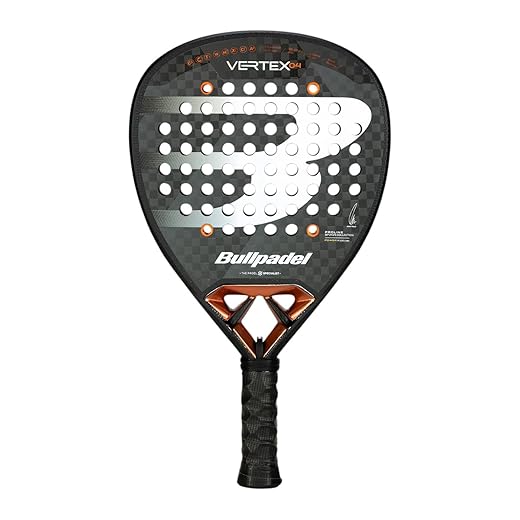
BULLPADEL Padel Racket Vertex 04 2025 Juan Tello | Professional Diamond Shape Pala Padel | Xtend Carbon 12K & MultiEva Core | Curvaktiv & Air Power Frame...
What to buy for your profile (quick guide): If you miss the center under pressure, go 12K + medium/soft EVA to keep accuracy stable and increase forgiveness. If you hit cleanly and prefer a sharp feel, try 18K + medium/hard EVA for higher stiffness and quicker response, but expect a smaller sweetspot. For defensive players who value maneuverability, prioritize medium EVA and avoid ultra-hard setups unless your technique is already reliable.
Shot Scenarios: Vibora, Bandeja, Smash–Which Ones Become Riskier with Power Builds
Choose a medium-face option with moderate stiffness (not ultra-rigid) if vibora and bandeja are your bread-and-butter–those shots get riskier first when you move to a harder, top-heavy build. With higher stiffness and a more aggressive balance, the ball tends to launch faster off the face, shrinking the usable sweetspot and reducing forgiveness. Result: you’ll miss the side glass more often on vibora (over-rotation + late contact) and float the bandeja long (open face + too much rebound), even if your accuracy is normally solid.
Vibora (risk increase: high). Vibora needs quick last-second wrist/forearm adjustment and clean side-spin. A rigid face with a head-heavy balance punishes micro-timing errors: late contact pulls the ball into the fence; early contact sends it too flat. To keep control and precision, aim for: (1) slightly lower grip pressure at impact, (2) contact 20–30 cm more in front of the body, (3) shorter backswing. If your maneuverability feels slow on fast lobs, consider 10–20 g less overall weight or a more even balance, because vibora demands quick positioning more than raw rebound.
Bandeja (risk increase: medium). Bandeja is a “safe” overhead only when trajectory and depth are predictable. With higher stiffness, the face returns energy faster, so the same swing sends the ball 0.5–1.5 m deeper than you expect. To preserve accuracy, close the face 3–5° more, and prioritize height over speed: target a higher apex and land the ball near the back third instead of chasing a winner. If your sweetspot is smaller, center contact becomes mandatory–practice 50 slow bandejas focusing on clean feel rather than pace.
Smash (risk increase: low to medium, depending on your level). The smash often benefits from a firmer feel, but it becomes riskier when you’re forced to hit “on the run” or from awkward backpedal positions. Head-heavy balance can delay the swing, causing frame hits and losing precision. For consistent outcomes: use a compact trophy position, meet the ball at full reach, and accept a controlled 70–80% swing when footwork is compromised. If you rely on kick-smash or x3 attempts, reduced forgiveness means the margin on contact point is smaller; prioritize clean center hits before adding maximum speed.
| Shot scenario | What becomes riskier with stiffer, head-heavier builds | Quick fix for control, precision, accuracy | What to look for in 2025–2026 Amazon models |
|---|---|---|---|
| Vibora from mid-court | Smaller sweet spot, less forgiveness; timing errors amplify side-glass misses | Shorter backswing + earlier contact; reduce grip tension | Even or medium balance; medium stiffness; higher maneuverability |
| Bandeja under pressure | Ball “jumps” long; depth control suffers | Close face by 3–5°; aim higher; slower tempo | Round or teardrop shape; consistent sweet spot; stable but not ultra-rigid frame |
| Running smash | Late swing, frame contacts, directional drift | Compact motion; use 70–80% effort when off-balance | Moderate head weight; good maneuverability; predictable rebound |
2025–2026 Amazon picks to compare (examples): if you want easier vibora/bandeja consistency, look at newer mid-stiff options in lines such as Nox AT10 (2025), Bullpadel Vertex/Metalbone 2025 variants in more balanced setups, or Adidas Adipower/Metalbone 2026 releases that offer adjustable balance. When testing, prioritize the model that keeps your sweetspot usable on slightly off-center contacts–your control and accuracy will improve faster than chasing extra rebound.
Control Frames Under Pressure: What You Give Up in Put‑Away Speed and Deep Lobs
Pick a round or teardrop “touch-first” frame only if you’re willing to trade put‑away speed for accuracy in fast exchanges; otherwise, choose a slightly stiffer 2025–2026 all‑court model with a medium foam to keep maneuverability while still finishing points when the ball sits up.
Under pressure at the net, the main cost is slower point‑ending pace: softer cores and thinner faces dampen rebound, so you’ll often need cleaner technique (earlier contact + longer follow‑through) to produce the same winner. In practical terms, you may notice that a high ball you’d normally finish in 1 swing turns into a “two-shot” plan: first place it with precision, then close the next ball. To compensate, prioritize a head-light balance (around 255–265 mm) for quicker preparation and choose a model with a medium-large sweetspot so off-center hits don’t die short.
Deep lobs are the second tax. Touch-oriented frames tend to launch lower unless you add more vertical swing and open the face slightly. If your lob lands mid‑court in defense, it’s rarely “lack of strength”–it’s usually ball lift: aim for a higher finish (hand above eye level) and hit 30–60 cm more under the ball. Look for added forgiveness via 3K/12K carbon + EVA mid, not ultra-soft foam, because very soft cores can reduce length consistency when you’re rushed.
- What you give up most: put‑away speed on volleys and overheads when the ball is above shoulder height.
- What you keep: placement accuracy, low-error blocks, and directional changes when defending tight angles.
- Best spec targets for pressure play: medium stiffness, head-light balance, and a clearly defined sweetspot (avoid tiny “pro” spots unless your technique is advanced).
For Amazon-available 2025–2026 options (search these exact names), compare the feel like this:
- HEAD Speed Motion 2025 – fast maneuverability and stable balance for quick volleys; good precision without being overly demanding.
- Babolat Counter Veron 2025 – larger sweetspot and extra forgiveness on blocks; helps keep deep lobs consistent when you’re late.
- NOX AT10 Luxury Genius 18K Alum 2025 – crisp response for accuracy; rewards clean technique, but mishits lose depth faster than “easier” frames.
- Adidas Metalbone Carbon 3.4 (2025) – more structure in the face for better finishing; choose it if you want precision without sacrificing too much put‑away pace.
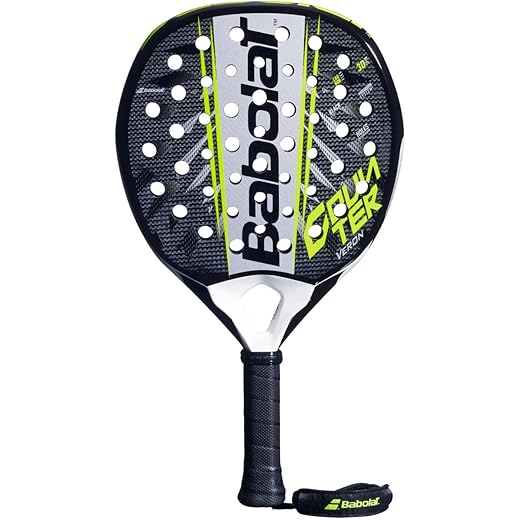
Babolat Counter Veron 2.6 Padel Racket (Black/Yellow)
Quick pressure checklist: if your winners turn into “returned balls,” move 5–10 g lighter or shift to a slightly higher stiffness; if your deep lobs fall short, pick a model with a larger sweetspot and medium foam, then focus on a higher finish to restore length without losing control.
Choosing the Right Type by Skill, Style, and Court Role
If you miss the ball often or your volleys float long, choose a rounder head with a larger sweetspot and medium stiffness: it boosts forgiveness and lets you improve technique without overthinking every contact. On Amazon (2025–2026 lines), look at models like NOX AT10 Luxury Genius 18K Alum 2026 or Babolat Counter Viper 2.5 (2025)–both are known for stable response and easy accuracy on defensive blocks. Aim for a neutral-to-slightly head-light balance if you play lots of quick reactions at the net.
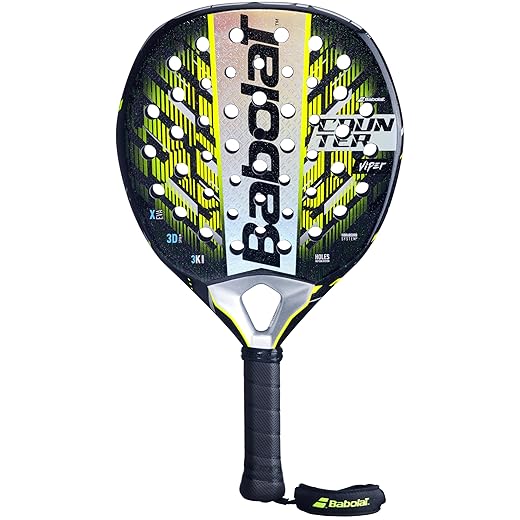
Babolat Counter Viper 2.5 Padel Racket
If you already place lobs and chiquitas reliably, move to a teardrop shape with moderate head-heaviness: you’ll gain put-away speed while keeping control. Prioritize carbon faces with “not too boardy” stiffness (often 12K–18K or hybrid layups) so you can keep precision on touch shots. Strong Amazon picks in recent releases include Adidas Metalbone Carbon 3.4 (2025) for players who like adjustable feel and Head Speed Pro (2025) for those who want a crisp response with dependable accuracy on volleys and bandejas.

HEAD Speed Padel Racket Paddle Series (Pro, Pro X, Motion, Elite, ONE, ONE X, Team)
If your court role is right-side (more construction and consistency), prioritize control metrics: wider sweetspot, lower swingweight, and a centered balance for repeatable placement. Your goal is tight precision under pressure–especially on low volleys and defensive digs–so avoid extreme stiffness unless your technique is very clean. If your role is left-side (more finishing), choose a slightly higher balance and firmer feel, but keep enough forgiveness to survive fast exchanges; otherwise your accuracy will drop when contacts are late.
Questions and answers:
Are power padel rackets actually harder to use, or is that just a myth?
They can feel harder because they usually trade forgiveness for speed. Many power rackets have a higher balance (more weight toward the head) and a stiffer face. That combination can reward clean contact with faster shots, but it punishes off‑center hits with less control and more vibration. If your timing and positioning are solid, a power racket won’t feel “hard”—it will feel lively. If you often contact late, stretch for balls, or hit near the frame, a control‑oriented racket will generally be easier.
Does a power racket reduce control on volleys and defense at the back of the court?
Often, yes—especially on fast exchanges. Higher balance can slow down preparation, and a stiff face can make touch shots feel “bouncy.” In defense, when you block or dig low balls, the ball may come off quicker than you expect, so it’s easier to pop it up or send it too deep. That doesn’t mean power rackets can’t be controlled; it means they ask for tighter technique: earlier racket preparation, shorter blocking motions, and more precise contact point. If your style relies on absorbing pace and placing the ball low, a lower balance and a larger sweet spot usually feel safer.



No Comment! Be the first one.